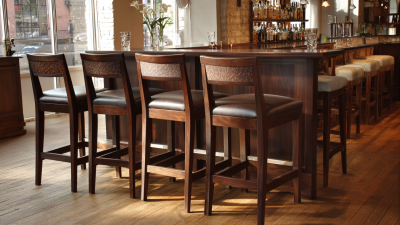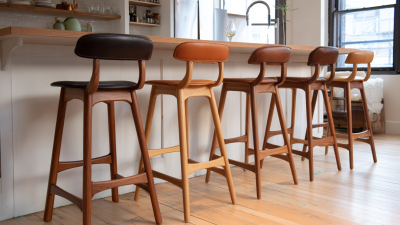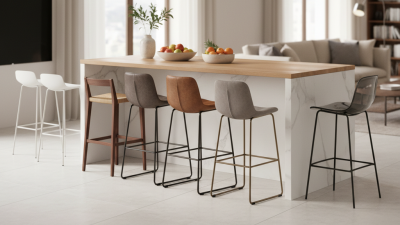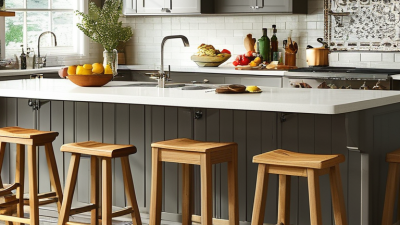

For global buyers, sourcing counter stools from China requires more than comparing catalog prices. A suitable supplier must balance design flexibility, production capacity, material consistency, and export reliability. This guide introduces ten Chinese manufacturers serving hospitality, retail, residential, and contract furniture projects. It considers their product focus, manufacturing strengths, customization options, and likely buyer fit.
The assessment looks beyond polished showroom photographs. It considers frame construction, welding or joinery, upholstery density, surface finishes, packaging, and quality-control procedures. A stool may look attractive online, yet wobble after repeated use. Seat height matters too. A 65-centimeter model suits many kitchen islands, while commercial counters may require different specifications. Buyers should request drawings, samples, load-test information, and current compliance documents before placing large orders. Factory audits and pre-shipment inspections remain valuable, especially for first-time partnerships.
No ranking is perfect. Supplier capabilities can change with equipment, staffing, and order volume. Some manufacturers excel at large standardized runs, while others handle smaller custom batches more carefully. Lead times may also shift during busy production seasons. These practical limits deserve attention. The manufacturers featured here provide a starting point, not a substitute for independent verification. Clear specifications, written tolerances, transparent payment terms, and responsive communication can prevent expensive surprises. Careful comparison helps buyers find counter stools that perform reliably in real spaces, not only in product images.
A leading counter stool manufacturer combines production experience with measurable quality control. Statista Market Insights estimated the global furniture market at about US$766 billion in 2024. This scale increases buyer expectations, especially for hospitality and residential projects. CSIL’s World Furniture Outlook 2024 continues to identify China as the world’s leading furniture exporter. However, export volume alone does not prove manufacturing excellence.
Reliable suppliers should verify frame strength, welding consistency, foam density, and surface durability. They should test stools against applicable EN or ANSI/BIFMA requirements, depending on the destination market. A practical inspection includes seat-height accuracy, footrest stability, rocking movement, and repeated-load testing. Details matter. A stool may look elegant but fail after months of daily use. Leading factories also control moisture levels in timber, inspect powder coating, and use corner protection during export packaging. Product traceability should connect each batch with materials, inspection records, and corrective actions. That is not enough. Buyers should also review factory capacity, sample revisions, and communication speed before placing large orders.
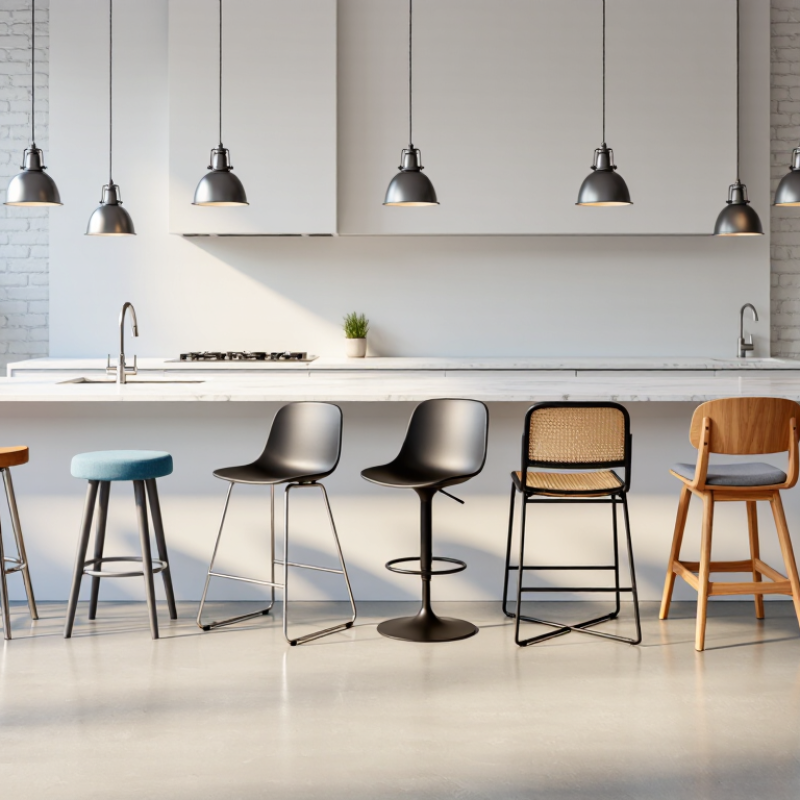
Professional manufacturers can explain why a 65-centimeter seat suits many kitchen counters, while taller counters may require approximately 75 centimeters. They should offer drawings, prototypes, and clear tolerance limits. No factory is flawless. The important question is whether it detects mistakes early and improves the process. Some suppliers still rely too heavily on visual inspection, which deserves careful buyer attention. Reliability comes from repeatable systems, not impressive showroom samples.
When evaluating China’s top ten counter stool manufacturers, begin with evidence, not catalog photography. Request factory videos, production records, and recent export references. A capable supplier should explain frame construction, welding methods, foam density, and surface treatment clearly. Ask whether steel is powder-coated, plated, or protected with another finish. Small details matter. Check seat height against your counter, usually 24 to 27 inches for standard kitchen islands. Request a sample before approving bulk production. One attractive image proves little.
Examine quality through measurable checks. Inspect welds for gaps, rough grinding, and uneven joints. Press the seat, rock the stool, and measure every leg on a flat floor. Ask for load-test results, carton-drop testing, and inspection records from the last shipment. Reliable manufacturers welcome third-party inspections and provide traceable corrective actions. Confirm material specifications, tolerances, fire requirements, and packaging details for your destination market. Compliance documents should match the actual product, not a similar model.
Compare ten suppliers using the same scorecard: sample quality, consistency, communication, lead time, minimum order, and after-sales response. Visit the factory when possible, or use an independent audit. A low quotation may hide thinner tubing, weaker hardware, or unstable color matching. I have found that fast replies do not always mean strong production control. That is worth remembering. Ask difficult questions twice, especially about delays and replacement parts. Keep written approvals for drawings, fabrics, dimensions, and tolerances. The best choice is rarely the cheapest; it is the supplier whose process remains dependable when orders become complicated.
Chinese counter stool manufacturing serves many global design needs, from compact cafés to high-volume hospitality projects. The first profile represents a factory focused on powder-coated steel frames. Its production team usually tests weld strength, footrest position, and surface consistency. Buyers should request recent inspection records, not only showroom photographs.
The second profile covers a workshop specializing in solid wood stools, with attention to kiln-dried timber, joint stability, and rounded edges. The third focuses on upholstered seating, where foam density, seam alignment, and stain resistance matter. The fourth combines metal and wood for industrial-style collections. Its strength is flexible customization, although small finish differences may appear between batches. Measure samples carefully.
The fifth profile describes a supplier experienced in flat-pack packaging. It can reduce shipping volume, but assembly instructions require practical review. The sixth serves contract projects with repeatable dimensions and documented quality checks. The seventh develops adjustable counter stools, requiring reliable lifting mechanisms and stable bases. The eighth focuses on outdoor-use materials, such as treated metal and weather-resistant polymers. Outdoor claims still need independent testing.
The ninth profile represents a factory with stronger private-label support, including packaging, color matching, and product drawings. The tenth emphasizes fast sampling and lower minimum orders, useful for emerging retailers. However, speed may limit material options. A serious evaluation should compare prototype weight, weld marks, wobble, carton protection, and delivery records. One overlooked issue is after-sales communication. It can decide whether a promising supplier remains practical.
China Top 10 Counter Stool Manufacturers for Global Buyers
When comparing China’s top ten counter stool manufacturers, product quality should come before attractive quotations. I inspect weld points, seat stability, surface finishing, and hardware consistency. A stool may look excellent in photographs but wobble on a showroom floor. Requesting samples is essential. Check the frame after repeated use, not only after delivery. Some factories provide inspection records, yet these records may not reveal packaging damage or color variation.
Customization separates capable suppliers from simple traders. Experienced manufacturers can adjust seat height, cushion density, fabric, powder coating, and carton design. Clear technical drawings reduce misunderstandings. Small details matter, such as leg protectors and footrest thickness. However, customization usually increases tooling time and minimum order quantities. Buyers should confirm approval samples before mass production. I have seen attractive prototypes become slightly different in full production. That remains a useful warning.
Pricing depends on steel grade, upholstery, order volume, labor, packaging, and shipping terms. The lowest offer is rarely the safest choice. Ask for a complete cost breakdown. Capacity also requires careful checking. A factory may claim high monthly output but lack enough sewing workers during peak seasons. Review production schedules, lead times, quality-control steps, and backup materials. A realistic supplier should explain delays honestly. No manufacturer scores perfectly across every category, and buyers should record these trade-offs before choosing.
Comparative benchmark of product quality, customization capability, price competitiveness, and production capacity.
Scores are normalized from 0 to 100. Higher scores indicate stronger performance. Price competitiveness reflects value for money, while production capacity represents estimated ability to support recurring wholesale orders. The benchmark is an indicative market comparison for initial sourcing decisions and should be verified through samples, factory audits, quotations, and production records.
Global buyers should treat a China counter stool shortlist as a sourcing project, not a popularity contest. A practical shortlist of ten manufacturers should include factories with stable export experience, clear material records, and repeatable production capacity. The 2023 World Bank Logistics Performance Index measures customs, infrastructure, shipment arrangements, logistics quality, tracking, and timeliness. Ask each supplier for evidence across these areas. A low factory price means little if delivery updates are vague.
Request a production sample with a 65-centimeter seat height, welded joints, powder-coated frames, and a tested footrest. Check wobble, edge finishing, weld consistency, packaging compression, and carton dimensions. The 2023 UNCTAD Review of Maritime Transport states that ships carry over 80% of global merchandise trade by volume. Freight planning matters. Compare port options, lead times, minimum order quantities, and replacement procedures before signing. Small details become expensive overseas.
Factory audits should review incoming materials, inspection points, worker training, and corrective-action records. ISO 9001 certification can support process control, but it does not guarantee perfect stools. That distinction is often missed. Ask for recent inspection reports and production photos with traceable dates. A video call can reveal useful details, such as unlabeled steel bundles or crowded packing areas. My checklist is not perfect either; an impressive showroom may hide weak after-sales control. Trial orders, independent inspections, and written specifications provide stronger evidence than promises.
| Rank | Anonymous Manufacturer Profile | Core Manufacturing Strength | Common Materials | Typical Counter-Height Range | Indicative MOQ | Typical Production Lead Time | Best Fit for Global Buyers | Key Verification Documents |
|---|---|---|---|---|---|---|---|---|
| 1 | Profile A — Export-Oriented Metal Seating Factory | Metal frame forming, welding, powder coating, and assembly | Steel, stainless steel, plywood, PU, fabric | 610–690 mm / 24–27 in | 100–300 units per model | 30–45 days after approval | Retail chains, hospitality projects, and repeat orders | Business license, material specifications, load-test report, packing details |
| 2 | Profile B — Solid-Wood Furniture Manufacturer | Kiln-dried wood processing, joinery, staining, and lacquer finishing | Rubberwood, ash, oak, beech, plywood | 610–690 mm / 24–27 in | 50–200 units per model | 35–55 days after sample approval | Residential furniture, restaurants, and boutique interiors | Wood species declaration, moisture-control record, finish sample, inspection report |
| 3 | Profile C — Upholstered Seating Specialist | Foam cutting, sewing, upholstery, and comfort-focused assembly | Steel, plywood, molded foam, PU leather, polyester fabric | 610–690 mm / 24–27 in | 100–500 units per fabric or color | 35–50 days after material confirmation | Cafés, hotels, offices, and comfort-led collections | Fabric composition, abrasion data, foam specification, seam-quality inspection |
| 4 | Profile D — Commercial Bar and Restaurant Seating Factory | High-volume production, reinforced frames, and contract furniture packing | Steel, aluminum, solid wood, plywood, synthetic leather | 610–690 mm / 24–27 in | 200–1,000 units per model | 30–45 days for repeat models | Large hospitality rollouts and standardized projects | Load testing, welding inspection, carton drop test, quality-control plan |
| 5 | Profile E — Mixed-Material Design Manufacturer | Integrated wood, metal, and upholstery production for custom designs | Steel, wood, plywood, rattan, fabric, PU | 610–690 mm / 24–27 in | 50–300 units per design | 40–60 days for customized products | Design-led brands, interior designers, and private-label programs | Approved drawings, prototype record, material certificates, final inspection report |
| 6 | Profile F — Outdoor and Indoor Metal Seating Producer | Corrosion-resistant metal treatment and outdoor-grade finishing | Aluminum, galvanized steel, stainless steel, rope, outdoor fabric | 610–690 mm / 24–27 in | 100–500 units per model | 35–50 days after finish approval | Patios, resorts, restaurants, and mixed-use developments | Coating specification, salt-spray test, outdoor-material declaration, load test |
| 7 | Profile G — Flat-Pack Furniture Manufacturer | Knock-down construction, space-efficient packaging, and assembly optimization | Steel, engineered wood, plywood, molded plastic, PU | 610–690 mm / 24–27 in | 300–1,000 units per model | 30–45 days for standard designs | E-commerce sellers and container-load buyers | Assembly instructions, hardware list, carton dimensions, drop-test report |
| 8 | Profile H — Sustainable Material Seating Manufacturer | Recycled, renewable, and low-emission material integration | Recycled steel, bamboo, certified wood, recycled plastic, natural fiber | 610–690 mm / 24–27 in | 100–500 units per model | 40–60 days depending on materials | Sustainability-focused retailers and green building projects | Recycled-content evidence, wood-origin documents, chemical compliance, audit report |
| 9 | Profile I — Custom OEM and Private-Label Factory | Product development, tooling coordination, color matching, and private labeling | Steel, aluminum, wood, plastic, fabric, PU leather | 610–690 mm / 24–27 in | 100–500 units per SKU | 45–70 days including development | Importers requiring exclusive designs and packaging | Technical drawings, golden sample approval, IP agreement, inspection standard |
| 10 | Profile J — Small-Batch Artisan Furniture Workshop | Hand finishing, small-batch woodworking, and detail-oriented assembly | Solid wood, cane, rattan, steel, natural fabric | 610–690 mm / 24–27 in | 20–100 units per model | 45–75 days depending on craftsmanship | Boutique retailers, restaurants, and project-specific orders | Material-origin records, sample approval, workmanship checklist, export packing record |
No account yet?
Create an Account