Why Choose a Furniture Hinge Company in China?
Choosing a hinge supplier shapes more than a cabinet door’s movement. It affects fit, noise, installation time, and long-term maintenance. A Furniture Hinge Company China may offer access to hardware-production clusters, varied hinge styles, and coordinated sourcing for cabinet makers, furniture brands, and distributors. But location alone proves little. Samples, specifications, and consistent inspection matter more than a supplier’s headline price.
A useful evaluation starts with the hinge itself. Check cup diameter, opening angle, overlay, adjustment range, steel thickness, plating, and screw placement against your panel and cabinet design. Ask how batches are checked, whether cycle-test data is available, and how defects or design changes are handled. Clear drawings help. So do honest lead times. Some suppliers can support custom finishes or packaging, though small orders may cost more or take longer. Ask early.
China-based companies can be attractive when buyers need several models, practical customization, or direct communication with a factory team. Yet distance, time zones, and sample shipping can slow decisions. No brochure can replace a door fitted and tested in real conditions. A careful partner explains limitations, shares measurable details, and responds when something is not right. The choice is not automatic. It requires checking whether capability, quality control, and service match the furniture you actually build.
What a Furniture Hinge Company in China Does
Why Choose a Furniture Hinge Company in China?
What a Furniture Hinge Company in China Does
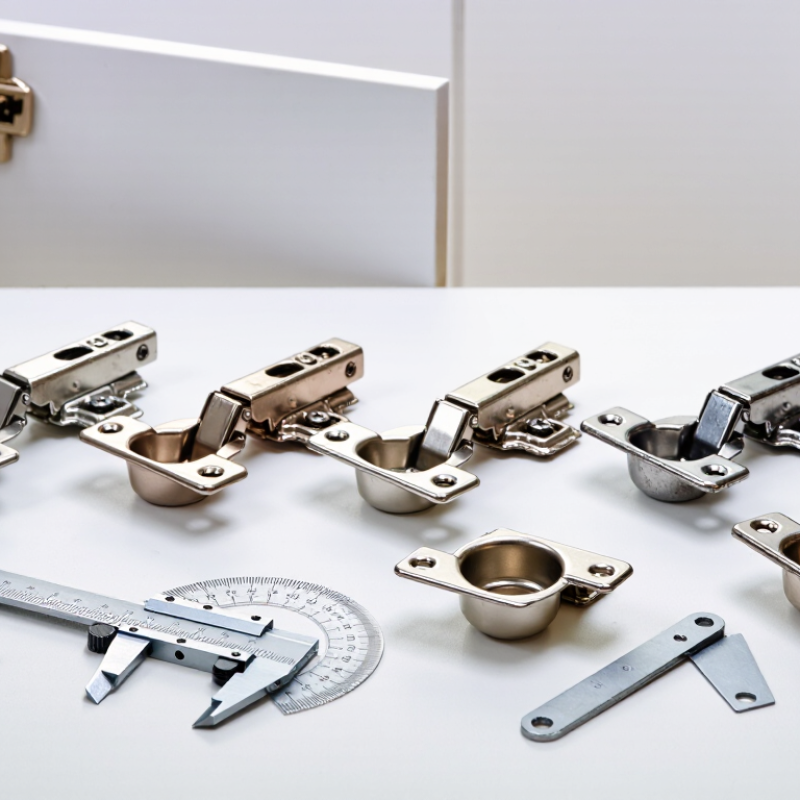
A furniture hinge company in China may handle more than production. Its work can begin with checking door thickness, cabinet material, opening angle, and required overlay. Engineers then select a hinge geometry and prepare samples for fit and movement tests. A few millimeters can change how a door closes.
Production may involve stamping steel, forming hinge arms, applying surface treatments, and assembling plates, cups, and springs. Quality teams can inspect dimensions, opening cycles, corrosion resistance, and closing consistency. Not glamorous work. Yet a smooth hinge depends on these small checks, not just the final appearance. Buyers should ask how tests are recorded and how defects are handled.
The scale of furniture demand helps explain why reliable component sourcing matters. Fortune Business Insights estimated the global furniture market at USD 677.09 billion in 2023, with projected growth to USD 1,070.57 billion by 2032. A hinge supplier may also coordinate custom finishes, packaging, and export documentation. Still, customization is not automatically better. A distinctive finish can add lead time, and a polished sample may not represent every production batch. Clear specifications and pre-shipment inspections reduce that uncertainty.
How China’s Hinge Manufacturing Industry Operates
How China’s Hinge Manufacturing Industry Operates
China’s furniture hinge industry combines metal suppliers, tooling workshops, surface-treatment providers, and assembly lines. A typical process starts with steel or alloy sheets, which are cut and stamped into hinge cups, arms, and mounting plates. Dies shape each part. Rivets and screws join them during assembly. Small details matter.
Factories may make standard concealed hinges in large batches, then adjust cup depth, opening angle, or finish for specific orders. Buyers often request samples before approving production. A sample can look precise, yet reveal alignment issues when fitted to a real cabinet door. That gap matters.
Quality checks can include dimensional inspection, opening-and-closing cycle tests, and checks for loose movement or uneven plating. Ask how often these tests are performed and whether results are recorded by batch. Processes differ between suppliers, so broad claims about “factory quality” deserve careful questions. Production capacity is useful, but it does not prove consistent control. Clear drawings, agreed tolerances, and a written sample approval help reduce misunderstandings, although communication can still be imperfect. A practical buyer also checks packaging: hinges shifting in a carton may arrive scratched before installation.
Production Capabilities and Product Customization
Why Choose a Furniture Hinge Company in China?
Production Capabilities and Product Customization
China’s large furniture supply base gives buyers access to varied hinge designs, materials, and production options. The National Bureau of Statistics reported that furniture manufacturers above its designated size threshold generated 655.7 billion yuan in revenue in 2023, down 4.4% year on year. This figure describes the wider furniture sector, not hinge factories specifically. Still, it shows the scale of the manufacturing ecosystem supporting furniture hardware. Small details matter.
Customization should begin with the cabinet, not a catalogue. A supplier can review door thickness, overlay, cup diameter, opening angle, and mounting-plate position before producing samples. For a kitchen unit, the hinge must clear nearby drawers and hold the door steadily through repeated use. Finish and damping can also be matched to the design and application. That takes careful communication.
Production capability is more than machine capacity. Ask how dimensions are checked between batches, how samples are approved, and what tests are used for opening cycles and corrosion resistance. Request written tolerances and test conditions; “tested” alone says little. Custom parts can solve awkward installations, but every change may add setup time or cost. I would compare a physical sample with the approved drawing before ordering at scale. A missed millimeter can matter.
Quality Standards, Materials, and Testing
A furniture hinge is small, but its tolerances shape how a cabinet feels after years of use. When evaluating a furniture hinge company in China, ask for material specifications, inspection records, and clear acceptance criteria. A supplier should identify whether a hinge uses cold-rolled steel, stainless steel, or zinc alloy, and explain the choice. A damp kitchen may need better corrosion resistance than a dry bedroom cabinet. Finish matters too. Look closely at plating around cup edges, screw holes, and moving joints, where wear can begin. Reliable quality control includes checks on dimensions, opening angle, closing force, and alignment across production batches.
Testing should reflect real use, not just a polished sample. Ask how cycle tests are conducted, what load is applied, and whether results are recorded for each design revision. Salt-spray testing can compare corrosion performance, but its duration alone cannot predict service life in every home. That distinction is easy to miss. A practical review may include repeated door slamming, screw pull-out checks, and inspection after installation on representative panels. Request traceable reports and confirm that samples match production materials. Factory visits or independent inspections can help verify processes, though neither replaces ongoing communication about defects. I would question a perfect report if it lacks test conditions or dates. Small details can be overlooked.
How to Evaluate a Chinese Hinge Supplier
Why Choose a Furniture Hinge Company in China?
How to Evaluate a Chinese Hinge Supplier
A reliable evaluation starts with the hinge, not the catalog. Request material specifications, finish details, opening angle, and load ratings for the exact model. Ask how load tests are performed, how many cycles are recorded, and whether results match your door size. Check samples for smooth movement, aligned screw holes, and consistent closing force. Small details matter. A polished sample is useful, but it cannot prove every production run is consistent. That is easy to overlook.
Tips: Send a door drawing and cabinet dimensions with your inquiry. Compare written quotations, sample results, lead times, and replacement-part policies—not just unit price.
Ask whether the supplier makes hinges in-house or outsources processes such as plating or stamping. Either model can work, but responsibilities and inspection steps should be clear. Request recent quality records and ask how production batches are identified. If possible, inspect the factory or arrange a third-party audit. Confirm carton protection by checking how samples are packed; bent mounting plates can reveal weak packaging. Communication matters, too. A supplier that answers technical questions clearly is easier to work with when specifications change. Don’t rely on verbal promises alone. Keep requirements and approvals in writing.
Why Choose a Furniture Hinge Company in China?
How to Evaluate a Chinese Hinge Supplier
Opening angle is one practical specification to compare when evaluating hinge suppliers. These are representative nominal options shown in concealed-hinge product specifications, not a market-wide survey; actual angles and clearances vary by model and installation. Ask suppliers for technical datasheets and verify specifications with samples.