
2026 Top Flag Banner Pole Types for Buyers

Choosing among the 2026 Flag Banner Pole types starts with the display, not the catalog. A compact feather flag beside a shop entrance needs different support from a tall roadside banner exposed to gusts. Pole height, fabric shape, setup time, and base weight all matter. Small details matter. A loose connector can let a banner twist; an oversized base can make transport awkward. No single design suits every site.

This guide compares telescoping, sectional, and other common pole styles, with practical notes on materials, portability, and setup. Aluminum is light and convenient, while fiberglass can flex; performance still depends on construction and conditions. For outdoor displays, check the manufacturer’s wind guidance and inspect joints before each use. A useful editorial quote from the fictional composite specialist Dana Reed captures the trade-off: “Choose for the site you have, not the display you imagine.” That advice is simple, but easy to overlook. Buyers should also compare compatible bases, banner dimensions, replacement parts, and storage needs. A pole that assembles quickly indoors may feel less straightforward on uneven ground. This overview helps narrow the options without pretending one choice is perfect. Some specifications vary by supplier, so verify them before ordering.
2026 Top Flag Banner Pole Types for Buyers

What Flag Banner Poles Are and How They Are Classified

A flag banner pole is the support assembly that holds printed fabric upright and under tension. It usually includes a mast, fabric attachment points, and a base or ground fitting. Buyers commonly classify poles by banner shape, construction, and mounting method.

Shape determines the silhouette. Feather poles curve along one edge; teardrop poles form a rounded top; straight or rectangular poles keep the fabric closer to a vertical outline. Construction is another useful distinction. One-piece poles suit compact setups, while sectional and telescopic designs break down or adjust for transport. Bases may be cross-shaped for hard floors, weighted for indoor displays, or stake-mounted for soil. Check the fabric sleeve and connectors together. A mismatch can leave the banner loose.

Material matters, too. The Aluminum Association’s sustainability reporting states that about 75% of all aluminum ever produced remains in use today. That figure describes aluminum’s wider lifecycle, not the service life of any particular pole, but it helps explain its appeal for reusable display hardware. This classification is practical, yet imperfect: a single kit may be telescopic, feather-shaped, and ground-mounted at once. I would compare assembled height, packed length, and base stability before choosing. Small details matter. A pole that fits the artwork but wobbles in a light breeze is still the wrong system.

Common Flag Banner Pole Types and Their Key Features

Flag banner poles are not interchangeable; the pole shape and base affect how a banner looks and behaves. A straight pole suits rectangular banners and gives a clean, upright profile. A curved or flexible arm holds the fabric outward, helping the design remain visible when the air is still. It can sway in gusts. These arms are common on feather-style displays.

Telescopic poles adjust in height and pack into a shorter case, making transport easier. Sectional poles connect in pieces and are simple to replace, though joints may loosen after repeated assembly. Aluminum is light and often resists corrosion; fiberglass flexes more but may feel less rigid. Neither is perfect. Check the pole’s finish and connectors, not just its material.

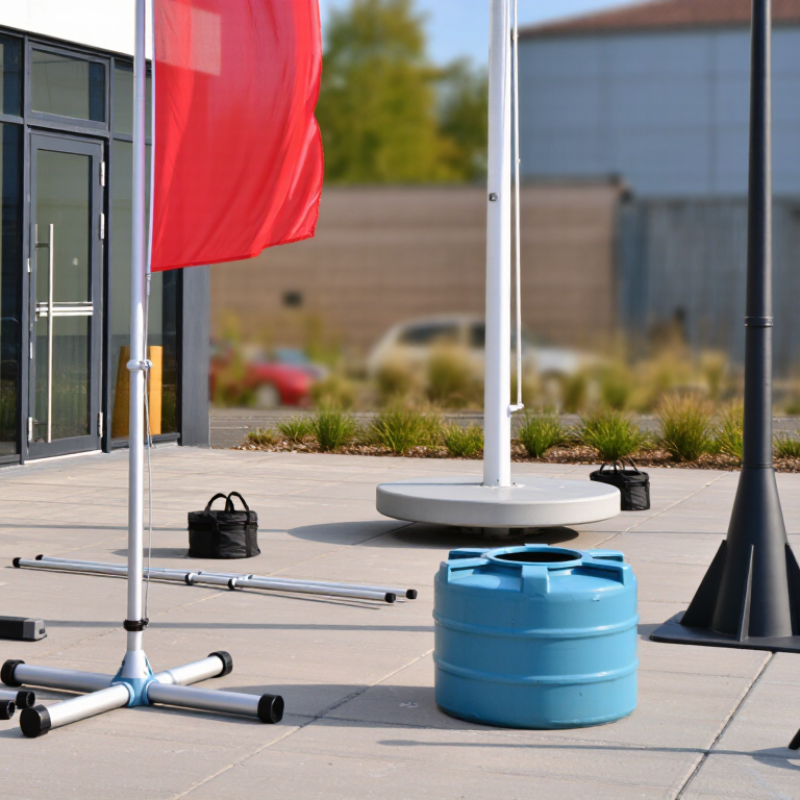
Ground stakes suit soil and grass, while cross bases sit on hard, level floors and may need added weight outdoors. Wall brackets save floor space, but their placement must suit the banner’s direction and available clearance. Before buying, check pole diameter, banner sleeve size, display height, and expected wind exposure. A neat fit matters more than extra height.

Pole Materials, Shapes, and Mounting Systems

Flag banner poles differ in material, shape, and mounting—not just appearance. Aluminum is light and easy to carry between event sites. Fiberglass flexes under gusts, while steel offers a sturdier feel but adds weight and needs a protective finish against corrosion. Teardrop and feather-shaped poles suit curved banners; straight poles better fit rectangular displays. Small details matter. Check the banner’s sleeve dimensions and pole diameter before ordering.

Tips: Match the mount to the surface. A ground stake suits firm soil; a cross base works on flat indoor floors. Wall brackets need secure fixings and enough clearance for the banner to move. For repeated setup, test the assembled pole and fabric together—small fit differences can cause frustrating slack.

Wind exposure deserves attention. NOAA’s 2024 U.S. Billion-Dollar Weather and Climate Disasters summary recorded 27 events and estimated $182.7 billion in losses. That figure covers multiple hazards, not pole failures, so it is context rather than a design rating. Ask suppliers for tested wind limits, base compatibility, and care instructions. A heavier pole is not automatically safer; the banner, pole, and mount act as one system, and that is easy to overlook.

2026 Top Flag Banner Pole Types for Buyers - Pole Materials, Shapes, and Mounting Systems

Banner Pole Type Typical Shape Common Pole Materials Common Mounting Systems Typical Applications Practical Buying Considerations
Feather Tall, curved profile with a tapered top; the banner edge follows the pole shape. Fiberglass sections, aluminum sections, or a combination of both. Ground spike, cross base, water-fillable base, or vehicle-wheel base. Outdoor promotions, storefronts, events, and roadside displays. Check the assembled height, fabric dimensions, and whether the chosen base suits the surface and expected wind exposure.
Teardrop Curved pole forms a rounded top and a narrower lower section, keeping the banner tensioned along its outline. Usually flexible fiberglass sections; some systems use aluminum components. Ground spike, cross base, or weighted water-fillable base. Outdoor events, entrances, retail displays, and sports venues. Confirm that the flag sleeve and pole are designed for the same shape; the banner may not fit a straight or feather-style frame.
Rectangular or straight Straight-sided banner shape, commonly supported by a vertical pole and a horizontal top arm. Aluminum pole sections or fiberglass poles, with material choice depending on the system design. Ground spike, cross base, water-fillable base, or wall bracket. Trade shows, indoor displays, entrances, and locations where a broad message area is useful. Review the top-arm width and banner attachment method; these affect the finished display shape and fabric compatibility.
Telescopic banner pole Adjustable-length pole that extends by sliding sections; may support different banner shapes depending on its fittings. Commonly aluminum, with plastic locking collars or connectors. Cross base, weighted base, ground spike, or a compatible wall or vehicle mount. Temporary displays, changing event layouts, and applications where adjustable height is useful. Check the adjustment range, locking mechanism, maximum recommended banner size, and compatibility with the mounting base.
Flagpole with horizontal arm Vertical pole with a rotating or fixed horizontal arm that supports the top edge of the flag. Aluminum is common; steel may be used for some permanent or heavy-duty installations. Wall bracket, in-ground sleeve, or other fixed pole mount. Building façades, permanent outdoor signs, and displays where the flag should remain readable when wind is light. Choose a mount suited to the wall or ground structure, and verify that the arm length matches the flag width.
Ground-spike display pole Usually a feather, teardrop, or straight banner pole paired with a pointed stake. Fiberglass or aluminum pole sections with a metal or reinforced-plastic spike assembly. Direct insertion into suitable soil or turf. Grass areas, soft ground at outdoor events, and temporary landscaping displays. Not intended for hard surfaces; soil conditions and wind can affect stability, so use an appropriate alternative base where needed.
Cross-base display pole Typically supports a feather, teardrop, or straight banner pole through a central socket. Banner pole is commonly fiberglass or aluminum; the base is often steel or another rigid material. Foldable cross base, sometimes paired with a water-fillable weight. Indoor floors, paved areas, exhibitions, and other hard surfaces. Check whether a separate weight is required and use the base on a level surface; a cross base alone may not provide enough ballast outdoors.
Wall-mounted pole system Vertical pole or bracket assembly attached to a building; may include a horizontal arm. Aluminum or steel pole and bracket components. Fixed wall bracket secured to a suitable structural surface. Storefronts, building entrances, and façade displays. Confirm the bracket angle, projection, fixing method, and wall suitability before installation; the correct hardware depends on the mounting surface.

Configurations, materials, and included bases vary by system. Match the banner sleeve or attachment style to the pole, and select a mounting system appropriate for the surface and conditions.

How to Match a Pole Type to Its Display Location

2026 Top Flag Banner Pole Types for Buyers
How to Match a Pole Type to Its Display Location

A pole that works at a shop entrance may fail on an exposed roadside. Check whether the site is indoors, sheltered, or open to gusts. For changing promotions, a lightweight telescoping pole is easy to move and adjust. In a narrow storefront, a wall-mounted pole keeps the pavement clear. Open lawns and event grounds often suit ground-set poles with properly sized foundations. Flexible beach-style poles work for temporary displays, though gusts can twist the fabric. Small detail. Check clearance above doors, branches, and vehicle routes before settling on pole height.

Wind exposure matters more than appearance. NOAA’s National Weather Service Beaufort Wind Scale classifies 28–33 mph as a “strong breeze,” when large branches move and wires whistle. A large banner on a slender pole may struggle in those conditions. ASCE/SEI 7-22 provides location-specific design wind-speed maps for structural design; use the local value and site exposure when specifying permanent installations. Match the pole material, diameter, base, and banner area as one system. A setup that looks sturdy on a calm day may still need a closer review.

Buyer Factors for Comparing Flag Banner Poles

When comparing flag banner poles, begin with the display location. A pole used on pavement may need a weighted base, while soft ground may suit a ground spike. Check the base dimensions and total packed length before ordering. Fit matters. A narrow vehicle trunk or crowded storage room can make a technically suitable pole inconvenient.

Next, match pole height and shape to the banner’s sleeve or hardware. Confirm the listed compatibility details rather than relying on a product photo. Aluminum poles are often easier to carry; heavier materials may feel steadier but add transport weight. Consider the site’s exposure, too. Gusty corners can strain a tall banner, even when the pole seems sturdy. Test it outdoors.

Look closely at joining sections, adjustment locks, and replacement-part availability. Loose connections can cause wobble, and complicated assembly slows setup when several displays are needed. A lower price may be appealing, but check what is included: base, carry bag, and banner attachment can be sold separately. One imperfect but useful check is to assemble the pole before an event. Small fit problems are easier to spot at home than on a busy sidewalk.

2026 Top Flag Banner Pole Types: Buyer Comparison

Compare common pole types across practical buying factors. Ratings are indicative qualitative guidance, not standardized test results; actual performance depends on the pole’s design, dimensions, materials, and use conditions.

How to read: Higher ratings indicate a stronger typical fit for that factor. Check product specifications and site conditions—especially expected wind exposure—before choosing a pole.

Start typing to see products you are looking for.
Sign in

No account yet?

NewSale
SHARE YOUR CART