



























The global cold chain is becoming a strategic infrastructure, not merely a refrigerated storage service. Food, vaccines, seafood, dairy, and fresh produce depend on stable temperatures. A cold chain warehouse must protect products through receiving, storage, picking, and dispatch.
The Global Cold Chain Alliance reported approximately 719 million cubic metres of refrigerated warehouse capacity worldwide in 2020. Its report also showed strong growth across major markets, especially in Asia and North America. FAO research adds urgency. Around 14% of food is lost between harvest and retail, with poor temperature control remaining a contributing factor. The numbers are substantial. They are not perfectly comparable.
Thomas Eskesen, a recognised cold-chain logistics advisor, has stated, “Cold chain is a system, not a technology.” This principle guides the companies examined in this ranking. Their performance depends on more than warehouse size. Energy efficiency, automation, monitoring systems, emergency power, and trained workers matter equally. A spotless freezer room means little if a loading door stays open too long.
This Top 10 review compares leading cold chain warehouse companies worldwide through practical criteria. These include geographic coverage, storage capacity, temperature visibility, service reliability, sustainability, and investment strength. Public data remains uneven, and company disclosures use different measurements. That limitation deserves attention. A larger network is not automatically better. The strongest provider may be the one that maintains a steady minus-20-degree environment, documents every temperature change, and responds quickly when equipment fails. This introduction therefore treats rankings as useful guidance, not absolute truth.
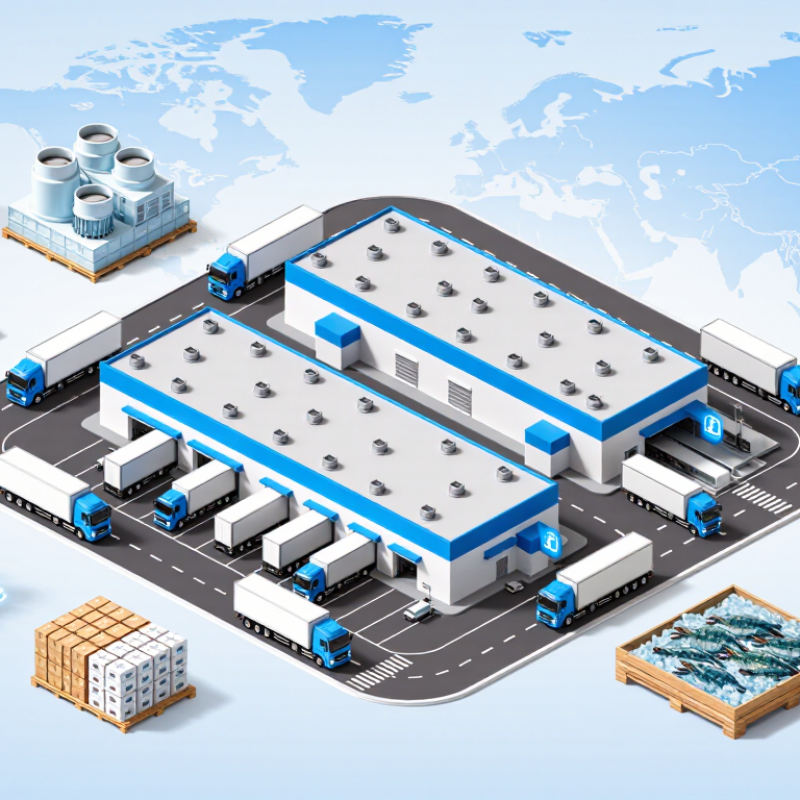
A cold chain warehouse is a temperature-controlled facility for storing products that can spoil or lose quality. It may handle fresh food, dairy items, medicines, or other sensitive goods. The building usually contains separate rooms for chilled, frozen, and ambient storage. Each zone requires different temperature limits.
In practice, reliable cold storage depends on more than refrigeration. Trained workers check digital sensors, door seals, loading times, and product temperatures. Backup power is essential during outages. Dock doors should open briefly, because warm air can quickly enter the storage area. Many facilities also use first-expiry, first-out stock rotation. This reduces waste and supports traceability. However, no warehouse system is flawless. A sensor may show a safe reading while one pallet remains too warm. Regular calibration and manual checks still matter.
Tips: Keep temperature records at fixed intervals. Place sensors near doors, ceilings, and crowded shelves. Inspect packaging for moisture or damage before dispatch. Limit unnecessary door openings. Review alarm procedures with every shift. Small oversights can become expensive problems. A practical audit should test real response times, not only written procedures.
A cold chain warehouse is a temperature-controlled facility that stores and handles perishable products, pharmaceuticals, biological materials, and frozen goods within defined temperature ranges.
Chilled storage is commonly maintained between 0°C and 5°C, while frozen food is generally stored at or below −18°C. Ultra-cold storage for selected biological products can require temperatures between −60°C and −90°C. Actual requirements vary by product, regulation, and handling procedure. Reference frameworks include WHO vaccine storage guidance, Codex food standards, and USDA food-safety recommendations.
Ranking the Top 10 Cold Chain Warehouse Companies Worldwide requires more than comparing storage volume. The Global Cold Chain Alliance’s 2023 Global Cold Chain Capacity Report estimated worldwide refrigerated capacity at about 719 million cubic meters. Capacity shows scale, but not operational quality. Evaluation should examine temperature stability, product traceability, loading speed, and coverage near ports, farms, and urban markets.
Energy performance deserves equal attention. The International Energy Agency reports that cooling already creates significant electricity demand worldwide, making efficient refrigeration a commercial and environmental concern. Strong operators measure energy use per pallet, refrigerant leakage, backup power, and maintenance response time. Independent audits and recognized food-safety certifications add credibility. So does evidence from real facilities, such as calibrated sensors, alarm records, and documented recovery after a power failure. Numbers can mislead. Some companies report global capacity, while others disclose only owned warehouses.
The best evaluation also considers workforce training, automation, cybersecurity, insurance protection, and financial resilience. The Food and Agriculture Organization has reported that roughly 14% of food is lost between harvest and retail, highlighting the value of reliable temperature control. Still, warehouse performance cannot be judged from marketing claims alone. Public data may be incomplete, especially across emerging markets. A practical ranking should therefore combine audited figures, customer service records, site inspections, and transparent methodology. That approach is less dramatic, but more trustworthy.
Anonymous evaluation framework based on publicly verifiable cold-chain operating metrics
| No. | Evaluation Dimension | Weight | Key Measurable Indicators | Strong-Performance Benchmark | Why It Matters |
|---|---|---|---|---|---|
| 1 | Temperature-Controlled Capacity | 18% | Total cubic meters or pallet positions; number of temperature zones; frozen, chilled, and ambient capability | Multi-temperature network with dedicated frozen storage at ≤−18°C and chilled storage generally maintained between 0°C and 8°C | Capacity and temperature range determine whether a provider can support diverse food, pharmaceutical, and biologic products. |
| 2 | Geographic Network Coverage | 14% | Number of facilities, countries served, proximity to ports, airports, production sites, and population centers | Multi-region coverage with strategically located facilities and access to major transport corridors | A distributed network reduces transit time, improves contingency options, and supports international supply chains. |
| 3 | Temperature Reliability | 14% | Continuous monitoring, alarm response, calibration records, excursion frequency, and corrective-action performance | 24/7 monitoring with documented alarm escalation, calibrated sensors, backup power, and validated corrective procedures | Temperature excursions can cause spoilage, product loss, regulatory issues, and patient-safety risks. |
| 4 | Food and Pharmaceutical Compliance | 12% | Applicable certifications, audit history, traceability procedures, hygiene controls, and documented quality systems | Relevant schemes may include HACCP-based controls, ISO 22000, BRCGS, GDP, or equivalent validated systems | Independent standards provide evidence that storage and handling processes are controlled and auditable. |
| 5 | Warehouse Technology and Automation | 10% | Warehouse management system, automated storage and retrieval, robotics, barcode or RFID tracking, and system integration | Real-time inventory visibility with integrated WMS, automated handling where appropriate, and electronic proof of movement | Technology improves inventory accuracy, throughput, traceability, and labor productivity. |
| 6 | Energy Efficiency and Sustainability | 10% | Energy intensity, refrigerant management, renewable electricity, insulation quality, emissions reporting, and waste reduction | Documented energy-reduction projects, low-impact refrigerants, efficient refrigeration systems, and measurable emissions targets | Refrigeration is energy-intensive, so efficiency directly affects operating cost and environmental performance. |
| 7 | Service Scope and Flexibility | 8% | Storage, cross-docking, blast freezing, repacking, labeling, order fulfillment, returns, and value-added services | Ability to combine storage with handling, fulfillment, customs support, and seasonal capacity adjustments | Flexible services reduce the number of handoffs and simplify complex cold-chain operations. |
| 8 | Operational Performance | 6% | On-time dispatch, order accuracy, inventory accuracy, dock-to-stock time, claims ratio, and throughput | Consistently documented service-level performance with high inventory and order accuracy | Reliable execution protects product quality and helps customers meet retail, manufacturing, and healthcare deadlines. |
| 9 | Business Continuity and Risk Management | 5% | Backup generation, redundant refrigeration, disaster-recovery plans, insurance, cybersecurity, and emergency transportation options | Tested contingency plans with redundant critical systems and documented emergency response procedures | Resilience limits disruption from power failures, extreme weather, equipment breakdowns, and cyber incidents. |
| 10 | Commercial Transparency and Customer Fit | 3% | Pricing structure, contract flexibility, minimum volume requirements, reporting quality, customer support, and implementation capability | Clear service-level agreements, transparent charges, reliable reporting, and solutions matched to product risk and volume | The best technical operator is not always the best fit unless its commercial model matches the customer’s needs. |
| Total Evaluation Weight | 100% | Companies can be compared using a weighted score from 0 to 100 for each dimension. | |||
Scoring note: The framework avoids displaying company or brand names and is designed to compare leading cold-chain warehouse operators using auditable operational, compliance, technology, sustainability, and service data.
The top 10 cold chain warehouse companies worldwide are judged by more than storage capacity. Reliable operators maintain stable temperatures, accurate inventory records, and fast loading schedules. A modern facility may hold frozen goods at -25°C, chilled products between 2°C and 8°C, and sensitive items in separate monitored zones. Small temperature changes matter.
Strong providers use calibrated sensors, backup generators, insulated loading docks, and warehouse management systems. They also apply FEFO, meaning products with earlier expiry dates leave first.
During a site visit, working alarm panels and clean air curtains reveal more than polished marketing material. Staff training matters too. Skilled teams record deviations, investigate causes, and protect goods during power interruptions.
Global leaders usually operate across several regions and understand different transport conditions. They coordinate reefer trucks, ports, customs documentation, and last-mile delivery without breaking the required temperature range. Independent audits and transparent performance data improve trust. Useful figures include order accuracy, alarm response time, spoilage rates, and average dock dwell time.
Yet, rankings are rarely perfect. A large network may offer impressive coverage but weaker service in remote areas. A smaller operator may provide better supervision and faster problem-solving. Buyers should inspect facilities, review recent audit findings, and test emergency procedures before signing contracts. Cold chain performance is measurable, but real-world reliability still depends on people.
Top 10 Cold Chain Warehouse Companies Worldwide: Services and Technologies Used
Leading cold chain warehouse companies provide more than frozen storage. They manage chilled, frozen, and temperature-sensitive goods through controlled handling systems. Their services often include receiving, inspection, cross-docking, order picking, blast freezing, tempering, and refrigerated transport coordination. At busy facilities, insulated loading docks reduce temperature changes while trained staff check products with calibrated probes.
Warehouse management systems connect inventory records with storage locations, expiry dates, and shipment schedules. Internet-connected sensors monitor temperature, humidity, door openings, and equipment performance throughout the day. Alerts reach control teams within seconds when conditions move outside approved ranges. Barcode and RFID tools improve traceability, although labels can still fail in condensation. Human verification remains necessary.
Many advanced facilities use automated storage systems, conveyor equipment, robotic pallet movement, and voice-directed picking. Energy platforms track compressor loads, lighting, and refrigeration efficiency. Some sites use lower-impact refrigerants and heat recovery systems to reduce operating costs. Strong operators also maintain backup power, emergency procedures, sanitation schedules, and documented maintenance records. These controls support food safety and regulatory compliance across different markets.
Technology does not remove every risk. Sensors may drift, software may misread data, and rushed loading can expose products to heat. Experienced managers therefore review temperature histories, audit suppliers, and retrain workers after incidents. A reliable cold chain depends on disciplined routines, not impressive equipment alone.
Global cold chain markets are expanding unevenly. The Global Cold Chain Alliance reported approximately 719 million cubic meters of global refrigerated storage capacity in 2023. Capacity growth remains strongest near large food markets and major ports. However, warehouse size alone cannot prove operational quality. Temperature stability, backup power, delivery access, and workforce training matter more during disruptions.
Leading companies increasingly invest in automated storage, energy monitoring, and low-carbon refrigeration. The International Energy Agency identifies cooling efficiency as a major global energy concern. Efficient insulation, variable-speed systems, and renewable electricity can reduce operating costs. The Food and Agriculture Organization also links stronger cold chains with lower food losses, especially in developing markets. Yet technology is not a complete solution. Poor maintenance can quickly damage expensive equipment.
Market comparisons remain imperfect. Public data often combines refrigerated storage with broader logistics services. This makes rankings less precise than they appear. A practical evaluation should examine usable capacity, temperature compliance, geographic reach, and emergency response records. It should also review water use and refrigerant management. The best operators may not always be the largest. Local reliability can outweigh international scale. That point deserves more industry attention. Data quality still needs improvement.
No account yet?
Create an Account