




Top 10 Ceiling Stud Types for Global Buyers

Global construction is becoming more technical, faster, and less forgiving. Ceiling Stud selection now affects load control, acoustic comfort, fire performance, installation speed, and long-term maintenance. Buyers must compare more than thickness and price. A 0.50-millimeter profile may appear economical, yet poor coating quality can create corrosion concerns in humid coastal projects.

The World Steel Association’s 2024 Short Range Outlook highlights continued pressure on steel demand, production efficiency, and resilient supply chains. The Dodge Construction Network’s 2024 Commercial Construction Index also shows how labor availability and project coordination influence material decisions. These findings matter because ceiling framing often arrives before interior trades are ready. A delayed shipment can leave rooms filled with loose tracks, cartons, and unfinished services.

Building-science expert Joseph Lstiburek offers a useful warning: “Buildings don’t work the way we draw them.” His observation applies directly to Ceiling Stud systems. A design may look perfect on paper, but site humidity, uneven slabs, mechanical loads, and rushed installation can change its performance. This guide examines ten ceiling stud types used by global buyers, including furring channels, resilient channels, hat channels, seismic systems, and load-bearing profiles.

The ranking is not absolute. Regional standards, testing methods, and contractor experience can change the best choice. That is an uncomfortable truth. Reliable procurement requires checking ASTM C645, EN 14195, or relevant local specifications. Buyers should also request mill certificates, coating details, dimensional tolerances, and project references. The right Ceiling Stud is not always the heaviest one. It is the profile that fits the building, climate, ceiling load, and installation reality.
Top 10 Ceiling Stud Types for Global Buyers

Ceiling Stud Basics: Structure, Materials, and Performance Standards

Top 10 Ceiling Stud Types for Global Buyers

Ceiling studs form the hidden framework that supports boards, insulation, lighting, and service access. A typical system uses perimeter tracks, carrying channels, and suspended or direct-fixed studs. Spacing matters. A 400-millimetre grid may reduce board movement, while wider spacing can lower material use but increase deflection risk. Always check the complete ceiling assembly, not one metal section alone.

Cold-formed galvanized steel is common because it offers predictable dimensions and strong resistance to indoor corrosion. Aluminum suits projects requiring low weight or better moisture resistance, while stainless steel serves aggressive environments at higher cost. Timber studs remain practical in some markets, but moisture content and treatment quality demand careful control. Thickness, flange shape, yield strength, and coating mass directly influence performance. Small differences matter.

Global buyers should compare fire resistance, acoustic ratings, thermal movement, load capacity, and corrosion classifications. These results should come from tested assemblies or reliable technical declarations. Local building codes may follow different measurement methods, so certificates need close review. A product passing one regional standard may not satisfy another. Specifications are rarely perfect. A neat drawing can still hide installation errors, incompatible fasteners, or overloaded access panels. Experienced installers verify level, hanger spacing, screw placement, and service clearances on site. Photos, batch records, and inspection notes improve traceability and make disputes less likely.

Ten Common Ceiling Stud Types Used in Global Construction

Top 10 Ceiling Stud Types for Global Buyers

Ten Common Ceiling Stud Types Used in Global Construction

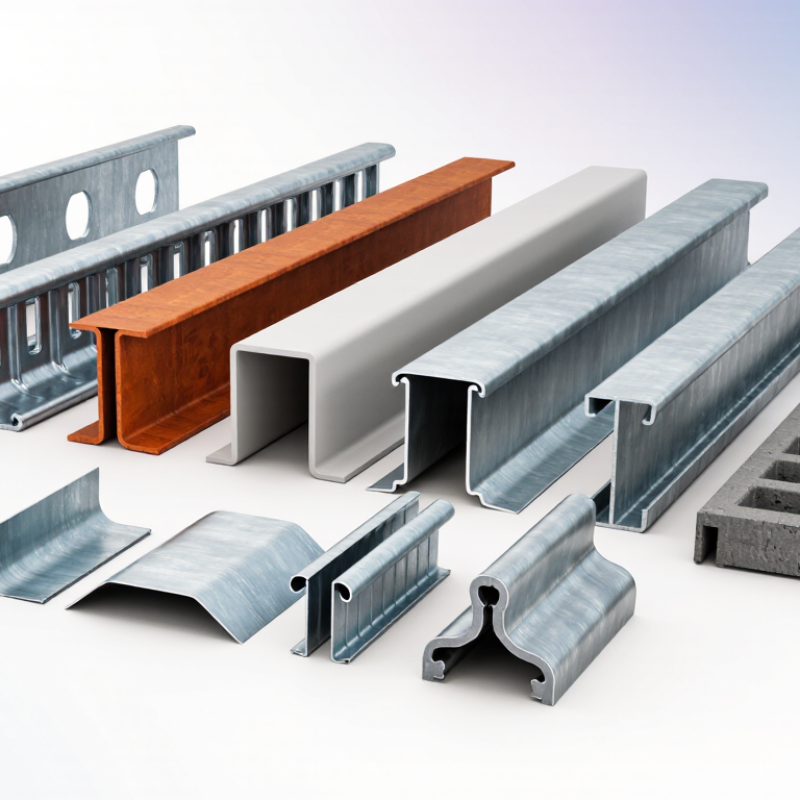
Ceiling framing varies with climate, loading, fire requirements, and local installation habits. In projects I have reviewed, ten profiles appear repeatedly across international markets. These include furring channels, hat channels, carrying channels, main runners, cross tees, perimeter angles, resilient channels, acoustic channels, metal furring sections, and drywall ceiling studs. Each profile serves a different structural or finishing purpose. Confusing them can create costly site delays.

Furring and hat channels create a level surface beneath uneven concrete or timber. Carrying channels and main runners support larger suspended ceiling grids. Cross tees divide the grid into regular panels. Perimeter angles hold edges neatly against walls. Resilient channels reduce vibration between boards and framing. Acoustic channels support sound-control assemblies, but their performance depends on the complete system. Metal furring sections suit modular suspended ceilings, while drywall ceiling studs form lightweight boxed or partitioned areas.

Choose the profile after checking span, board weight, corrosion exposure, and service access. In coastal regions, galvanized protection deserves close attention. For humid interiors, storage conditions matter too. A strong-looking section may still fail when spacing is excessive. I once saw a ceiling deflect because installers followed a familiar layout instead of the approved load table. That mistake was avoidable. Product dimensions, steel thickness, and connection methods should be verified against project drawings and applicable regional standards. No single ceiling stud fits every market.

Top 10 Ceiling Stud Types for Global Buyers - Ten Common Ceiling Stud Types Used in Global Construction

No. Ceiling Stud or Framing Type Typical Material Profile or Form Common Ceiling Application Typical Size Range Main Advantages Buyer Considerations
1 C-Shaped Drywall Stud Galvanized cold-formed steel C-section with flanges and return lips Suspended or direct-fix ceilings, bulkheads, soffits, and framed ceiling drops Approximately 38–150 mm web depth; gauges vary by design load Lightweight, straight, non-combustible, and easy to cut and assemble Check steel thickness, corrosion coating, stud spacing, and load tables rather than relying on nominal size alone
2 U-Track or Perimeter Track Galvanized cold-formed steel U-shaped channel without a web return Top and bottom runners for ceiling drops, partitions, and perimeter framing Usually matched to the depth of the selected C-stud Provides a simple guide and fixing edge for vertical or sloping framing It is a track component, not a load-bearing stud; use compatible dimensions and approved fixings
3 Furring Channel Galvanized steel Shallow channel, commonly with a narrow or lipped profile Direct attachment of gypsum board below concrete slabs, joists, or primary framing Common depths are about 16–22 mm, depending on regional systems Creates a level fixing surface while using limited ceiling depth Verify allowable span, board loading, suspension method, and compatibility with clips or hangers
4 Hat Channel Galvanized steel or aluminum Hat-shaped section with a raised central crown Ceiling furring, acoustic lining support, and wall or soffit lining Often approximately 22–25 mm deep; width and thickness vary Fast installation, useful service cavity, and improved alignment of board surfaces Confirm whether the product is intended for direct fixing or suspended installation and check local span limits
5 Resilient Channel Light-gauge galvanized steel Asymmetric or offset channel designed to flex slightly Acoustic ceilings where gypsum board must be decoupled from joists or framing Typically shallow, around 13–20 mm deep Can reduce direct vibration transfer when correctly installed Do not use it as a general load-bearing furring member; board screw length and fixing locations are critical
6 Carrying Channel Galvanized steel Deep primary channel, commonly used with clips or hangers Primary support in suspended gypsum-board ceiling systems Common depths are approximately 35–60 mm, subject to system design Supports secondary furring members and helps create a rigid suspended grid Purchase as a coordinated system; hanger spacing and connection capacity control performance
7 Omega Profile Galvanized steel Ω-shaped or hat-like profile with a central crown Direct-fix ceiling and wall lining over masonry, concrete, or uneven substrates Often about 15–30 mm deep, with regional variations Provides leveling space and a convenient screw-fixing surface Profile names and dimensions differ by market; request section drawings and load data
8 Z-Furring Channel Galvanized steel Z-shaped section with offset flanges Ceiling or soffit lining where insulation, leveling, or a service cavity is required Depth commonly selected from about 25–75 mm Accommodates insulation thickness and can help correct uneven support surfaces Check flange orientation, corrosion protection, fastener type, and allowable unsupported span
9 T-Grid Main Runner Galvanized steel with a finished metal face Inverted T-shaped exposed grid member Lay-in mineral fiber, metal, and other demountable suspended ceiling tiles Common face widths are approximately 24 or 15 mm Fast access to building services and straightforward tile replacement Main runners, cross tees, hanger wires, and perimeter angles must be dimensionally compatible
10 Timber Ceiling Joist Structural softwood or engineered wood Rectangular solid-sawn or I-shaped engineered section Residential ceilings, roof spaces, and projects using traditional wood framing Common solid-wood depths are about 140–240 mm; engineered sizes vary Widely available, workable with standard carpentry tools, and suitable for structural spans when designed correctly Specify timber grade, moisture condition, treatment, span, deflection, fire, and termite requirements for the destination market

Note: Dimensions and applications are typical industry ranges. Final selection should follow the applicable local building code, structural calculations, fire requirements, corrosion category, and the installation instructions for the complete ceiling system.

Key Differences in Strength, Corrosion Resistance, and Installation

Ceiling framing varies widely in strength, corrosion resistance, and installation speed. The ten common choices include galvanized steel studs, G90-coated steel, Z275-coated steel, stainless steel 304, stainless steel 316, aluminum studs, structural cold-formed steel, hat channels, furring channels, and resilient channels. Galvanized steel offers a practical balance for dry interiors. Stainless steel performs better near salt, humidity, and chemical exposure, but costs more. Aluminum is lightweight and easy to cut, although it usually has lower stiffness than steel.

AISI S100-24 supports design checks for cold-formed steel strength and buckling. ASTM C645-24 covers nonstructural steel framing requirements, while EN 14195 addresses metal framing components used in gypsum systems. ISO 9223 corrosion classes help buyers match coatings to atmospheric risk. In practice, a thicker section often reduces ceiling deflection, but it can slow screw installation. Resilient channels improve acoustic separation, yet they are not a substitute for load-bearing framing. A cheaper gauge may look acceptable on a sample panel. It may still sag after years of service.

Tips: Check the coating mass, base metal thickness, span, and screw compatibility before ordering. For coastal projects, request salt-spray or corrosion test evidence. Stainless steel 316 can be excessive indoors. However, selecting mild steel near persistent condensation can be a costly mistake. Installation crews should verify channel alignment with a laser, because small errors become visible under continuous ceiling lighting.

How to Match Ceiling Stud Types with Building Conditions

Top 10 Ceiling Stud Types for Global Buyers

How to Match Ceiling Stud Types with Building Conditions

Choosing ceiling studs should begin with the building, not the catalog. Light-gauge Galvanized Studs suit ordinary apartments with moderate ceiling loads. Heavy-duty steel studs work better under dense lighting, acoustic panels, or mechanical equipment. For humid bathrooms, choose corrosion-resistant or moisture-protected sections. Plain steel may rust faster than expected.

Fire-rated studs are suitable for ceilings requiring tested fire resistance. Acoustic studs help reduce sound transfer in offices, hotels, and recording rooms. Furring channels are useful when you need a shallow ceiling profile. Suspended ceiling studs support service access and allow cables to pass above the grid. Curved sections can follow decorative forms, but installation needs tighter measurement control. Seismic-resistant systems suit regions with frequent movement, though the complete assembly must meet local requirements.

Check span, spacing, board weight, humidity, and access needs before ordering. A 0.6-metre spacing pattern may change when heavier boards are used. I have seen projects fail because the ceiling frame looked strong but lacked enough suspension points. That mistake is easy to repeat. Verify coating thickness, section dimensions, and load data with the supplier’s technical documents. Local building codes still control the final choice. In coastal areas, even a small cut in protective coating can become a rust point. Field conditions are rarely perfect. Allow practical adjustment without weakening the frame.

Global Buying Criteria: Sizes, Certifications, Costs, and Suppliers

Global buyers often compare ten ceiling stud types: furring channels, hat channels, C-studs, main runners, cross tees, acoustic studs, seismic systems, curved profiles, heavy-duty studs, and corrosion-resistant studs. Each suits a different ceiling load, spacing plan, or indoor climate. Galvanized steel is common, while aluminum can reduce weight. Confirm thickness, flange width, length tolerance, and coating weight before requesting quotations. Small dimensional differences can create visible joint problems.

Certification requirements vary by destination and building use. Ask for test reports covering fire performance, corrosion resistance, load capacity, and material composition. Check whether documents come from an independent laboratory. Factory quality systems also matter, especially for repeated projects. A supplier should provide batch traceability, inspection records, samples, and clear packaging details. I have seen attractive samples fail when production tolerances were poorly controlled.

Cost comparison should include tooling, minimum order quantities, inland transport, ocean freight, insurance, duties, and replacement risk. The cheapest unit price is rarely the cheapest delivered option. Request a landed-cost sheet with currency, payment terms, lead time, and warranty conditions. Evaluate suppliers through factory audits, video inspections, and reference projects. Do not rely on certificates alone. They may be valid but incomplete for your market. A practical trial order exposes weaknesses early, although it can slow procurement. That delay is sometimes worth accepting.

Start typing to see products you are looking for.
Sign in

No account yet?

NewSale
SHARE YOUR CART