























Glass Cabinet Hinges may look like a small detail, but they shape how a cabinet opens, closes, and presents what is inside. The right choice depends on more than appearance. Door weight, glass thickness, cabinet-frame design, opening angle, and installation method all matter. A hinge that feels smooth on an empty door can behave differently once the cabinet is fully loaded.
Industrial designer Dieter Rams is often quoted as saying, “Good design is as little design as possible.” That idea applies here: the best hinge often works quietly, without distracting from the glass or cabinet finish. Still, appearance alone is not enough. Check the hinge’s stated door-weight capacity and glass compatibility, and confirm whether it needs drilling, clamps, or a specific mounting plate. Small details count.
This guide explores seven practical points, from hinge type and material to adjustment, clearance, and maintenance. A careful comparison can prevent a door from rubbing against a neighboring panel or sitting slightly crooked under bright kitchen lights. The process is not always neat; product descriptions can be vague, and measurements deserve a second look. That is worth admitting. Treat the manufacturer’s installation instructions as the final reference, then test the door gently after fitting. A good choice should feel steady, align cleanly, and suit the way the cabinet is actually used.
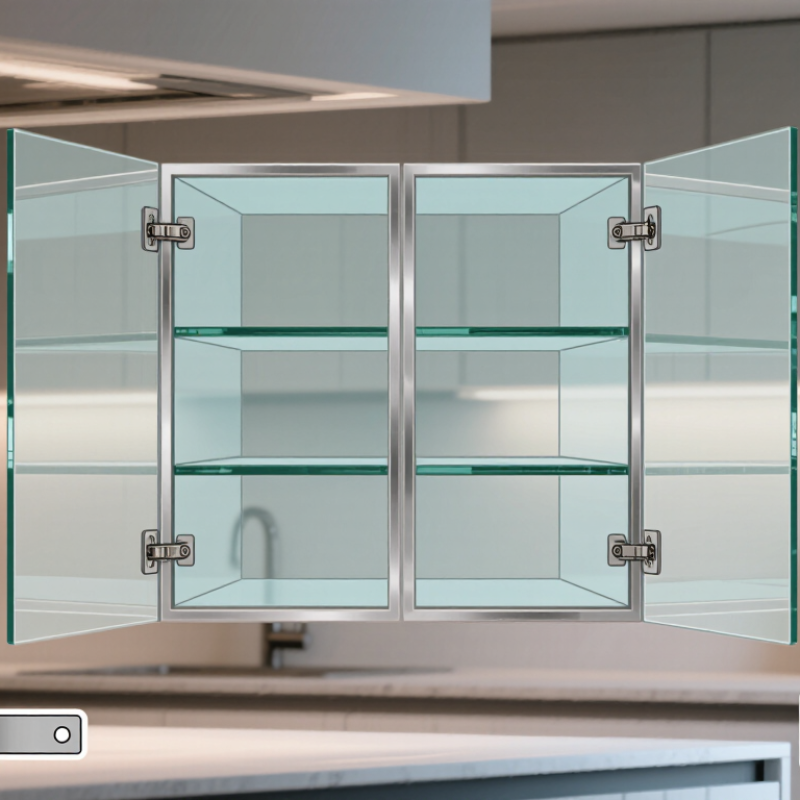
Choosing glass cabinet hinges starts with identifying the glass itself. Check whether the door is tempered, laminated, or another type, and look for any markings or installation records. Different glass constructions may require different mounting methods. Never assume a hinge designed for drilled glass will suit an undrilled panel. Some hinges grip the edge instead, but their pads and clamping range must match the glass.
Measure the glass thickness with calipers, or use a reliable specification from the supplier. Even a small mismatch can leave a clamp loose or put uneven pressure on the panel. Check the hinge’s stated thickness range before ordering. Then measure the door’s height, width, and weight. A tall, wide door creates more leverage, especially when opened fully. I have found that measuring only the glass, not the finished door, can cause trouble. It is an easy mistake.
Also note the cabinet opening, overlay, and space beside nearby doors or walls. A hinge may fit the glass yet swing into a handle or adjacent panel. Record measurements in millimeters, and measure each door rather than assuming they match. They may not. If the glass type or thickness is uncertain, pause before installation and confirm it with the glass supplier or a qualified installer. A rough estimate is not enough when a heavy panel hangs above a cabinet shelf.
Surface-mounted hinges grip the glass with padded plates, so the door usually needs no drilled holes. They can be a practical choice for an existing cabinet or a replacement door. Check the hinge’s stated glass-thickness range and measure the door carefully. A clamp that is too loose may shift; one tightened too far can stress the glass. Follow the manufacturer’s torque guidance rather than relying on feel alone. Small detail. Big consequence.
Drilled hinges use holes made in the glass before it is tempered. This can create a neater, more integrated look, but hole position must match the cabinet and hinge exactly. Measure from the door edges, then check the overlay and opening clearance with a drawing or template. Tempered glass cannot be drilled or trimmed after tempering. If a replacement door is needed, its hole pattern must match the hardware. No guesswork here.
Before choosing, consider how often the door will move and how visible the hinge should be. Surface-mounted hardware is often easier to adjust or replace, while drilled hardware depends on precise fabrication. In fitting checks, a few millimetres can change whether a door clears an adjacent panel. I would recheck those measurements, even when they seem obvious; it is easy to trust a template too quickly. For heavy doors or uncertain glass specifications, confirm suitability with the glass fabricator or a qualified installer.
A glass cabinet door can feel light in your hand but still strain a small hinge over time. Check the door’s weight and thickness against the hinge maker’s stated limits. Include the handle and any attached trim when estimating the load. Also check whether the rating applies to one hinge or a full set; that detail is easy to overlook.
Tip: Match the hinge’s load capacity to your actual door, not just its appearance. Follow the maker’s guidance on hinge quantity and spacing, since a heavier door may need more support. A quick measurement now can prevent sagging or uneven gaps later. Leave a little margin rather than choosing a hinge rated right at the estimated weight.
Material matters, especially around sinks or in humid rooms. Stainless steel generally resists corrosion well, while brass offers a solid option; zinc-alloy hinges vary in finish and construction. Check the product specifications instead of judging by color alone. The finish can hide the base material. No material is perfect, and I would not assume every “stainless” part has the same grade. Choose a hinge designed for glass thickness and mounting style, then confirm that its fasteners suit the cabinet.
A glass cabinet hinge should suit the way the door opens, not just its appearance. For an inset door, which sits inside the cabinet frame, choose a hinge that lets the glass clear the opening without scraping the edges. Overlay doors sit over the frame, so their hinges need to provide enough outward movement. Small differences matter. Check the frame depth and neighboring doors before choosing.
For a pair of doors, confirm that each door can swing freely without colliding at the center. A wide door may need a different hinge position or opening angle than a narrow one. Frameless cabinets also need hinges made for their panel layout; the support and mounting points differ from framed cabinets. Measure twice. Then compare the hinge’s stated glass-thickness range and mounting method with the door in hand. Glass-specific clamps and protective gaskets help hold the panel without point pressure. Never assume a hinge fits because its screw pattern looks close. Tempered glass should not be drilled or trimmed after manufacture. It is easy to overlook the opening path until the handle catches a wall or an adjacent door. Leave room for that swing, even if the closed cabinet looks perfectly aligned.
These qualitative ratings show typical hinge-to-opening matches, not measured test results. Overlay and inset describe how a door sits against the cabinet; glass-to-cabinet and glass-to-glass describe the surfaces the hinge connects. Always check the door and cabinet specifications before choosing hardware.
Houzz’s 2024 U.S. Kitchen Trends Study reports that 76% of renovating homeowners upgrade kitchen cabinets. Glass doors need more than a good-looking hinge: check the glass thickness, door weight, overlay, and cabinet-frame material. Confirm whether the door has predrilled holes. Many glass hinges clamp the panel with padded plates instead, and their permitted thickness range varies. A mismatch can leave the door loose or put pressure on its edges.
Tip: Match the hinge to the door before buying. Measure the glass with calipers if possible, then compare it with the hinge maker’s stated range. Check the door’s height and width, too; a wide panel can sag even when its weight seems modest. I’ve found that rough estimates are easy to trust—and easy to regret.
Tip: Look for practical adjustment and a workable installation method. Three-way adjustment can help correct small alignment errors after mounting. Confirm the hinge clears nearby shelves, handles, and adjacent doors when opened. Follow the glass supplier’s guidance on drilling; tempered glass cannot be drilled after tempering. ANSI Z97.1 and CPSC 16 CFR Part 1201 address safety-glazing impact performance, not hinge fit or load capacity. Keep those checks separate. Before installation, support the panel on a padded surface and use the specified fasteners; a careful dry fit can reveal awkward clearances early.
No account yet?
Create an Account