






Floral Wallpaper can transform a room, but a beautiful pattern is only part of a sound buying decision. Global buyers must also consider scale, material, color accuracy, shipping, and installation. A sample that looks soft and subtle online may feel bold beside a real window. Small details matter.
British designer William Morris, known for his wallpaper patterns, offered a useful principle: “Have nothing in your houses that you do not know to be useful, or believe to be beautiful.” For buyers, that means asking whether a design suits the room and whether its construction suits everyday use. Check the repeat size, roll dimensions, surface finish, and cleaning guidance. Request a physical sample when possible. Screens can mislead.
This guide introduces ten practical tips for comparing Floral Wallpaper across suppliers and markets. It covers pattern scale, paper and nonwoven options, color consistency, order quantities, and clear product specifications. Buyers should also confirm how batches are labeled and how delivery timelines are communicated. These checks cannot remove every surprise. Installation conditions, lighting, and personal taste still matter. A pattern may feel right in a sample and look crowded across a full wall. Leave room to reconsider before placing a large order.
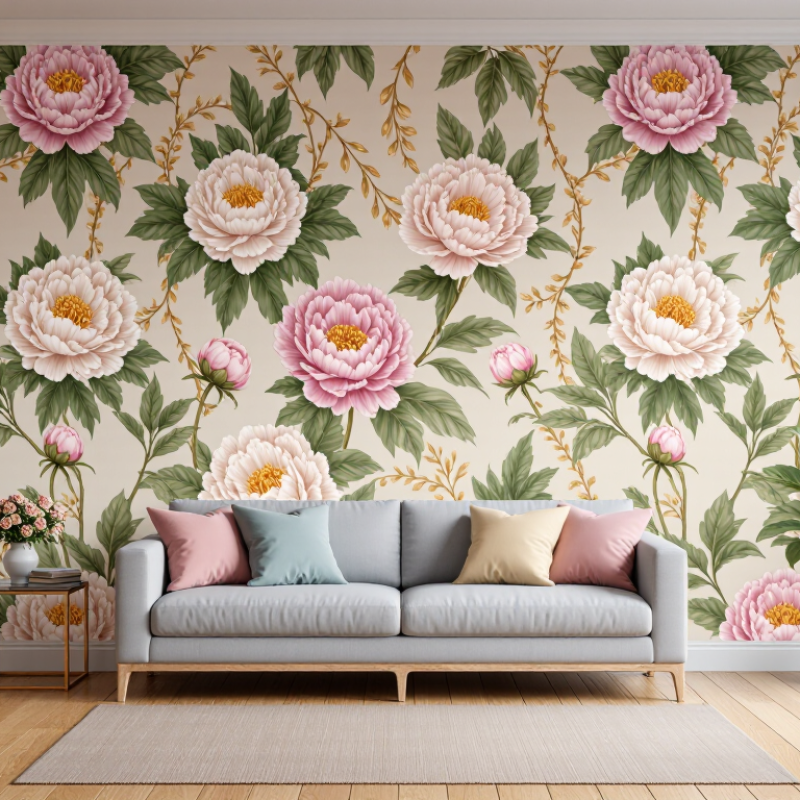
Floral wallpaper should match both the room’s function and its visual scale. A loose watercolor pattern can soften a bedroom, while crisp, high-contrast blooms may suit a hallway where visitors see them briefly. Large motifs need breathing room; crowded furniture can make them feel noisy. Small repeats often sit more quietly in compact rooms, though they may look busy across a full wall. Scale matters.
Check the light. North-facing rooms can make cool greens and blues feel subdued, while warm afternoon light may intensify reds and yellows. Order samples and view them beside flooring, curtains, and trim at different times of day. A sample can still mislead: a small swatch hides how repeated flowers create movement across a wall. Consider washable finishes for busy family areas, and confirm the product’s moisture guidance before using it in humid spaces.
Room planning is practical, not merely decorative. Houzz’s 2024 U.S. Houzz & Home Study reported that 54% of surveyed homeowners renovated in 2023, with a median renovation spend of $24,000. That broader renovation context supports checking wallpaper against the whole project budget, not just the roll price. Grand View Research valued the global wallpaper market at about $1.8 billion in 2023 and projected 4.0% annual growth through 2030. These figures describe the market, not a guarantee that floral designs suit every buyer. Regional taste varies, and personal preference matters. A pattern that looks elegant online may feel overwhelming at home.
Floral wallpaper can look similar online, yet its backing and surface coating change how it performs. Paper options often show fine print detail and suit low-traffic rooms, but they can tear during installation and usually need careful, dry cleaning. Nonwoven wallpaper is generally easier to handle and remove; check the product instructions, since construction varies. Vinyl-coated surfaces tend to tolerate fingerprints and light wiping better, which can help in hallways or dining areas. That matters.
Durability depends on more than the material name. Ask for abrasion, lightfastness, and moisture guidance, especially if the room gets strong sun or frequent humidity. A large sample reveals more than a small screen image: inspect the flower outlines, surface texture, and color beside your actual flooring. I may be overcautious, but a sample left near a bright window can expose fading concerns before a full order. Check batch consistency and keep spare rolls for future repairs.
Cleaning needs should match the room’s real use. Dust textured paper with a soft brush; avoid assuming it can be scrubbed. For wipeable finishes, use a lightly damp cloth and mild soap only when the care guide allows it. Test an inconspicuous area first. Not always. Even a durable coating can dull under abrasive pads or excess water, and seams may be more vulnerable than the printed face. Ask suppliers for written cleaning instructions, roll dimensions, and storage advice before comparing landed costs.
Measure every wall separately, even when the room looks square. Record the width and height in metres or inches, and note sloped ceilings, alcoves, and chimney breasts. Measure wall height at both ends; older rooms are rarely perfectly level. Use the larger figure.
For a quick estimate, add wall widths and divide by the usable width of one roll to find the number of strips. Then calculate each strip’s cut length, allowing extra for the pattern repeat. For example, a 2.6-metre wall with a 64-centimetre repeat may need cuts close to 3.2 metres, not exactly 2.6. Check the roll label for its stated dimensions and coverage. A small sketch helps.
A neat spreadsheet can still be wrong. I would add roughly 10% for trimming and mistakes, and more for large repeats or awkward layouts. Don’t subtract doors and windows automatically; their positions may not save usable strips. A 4-by-3-metre room with 2.6-metre walls and 53-centimetre-wide rolls could need about ten rolls, depending on repeat and cutting plan. Ask the seller to verify the estimate against the exact design, then order enough from one production batch. Keep one spare roll if storage allows. A missed measurement is annoying. It happens.
How to read this: Estimates assume about 4.5 m² of practical coverage per roll, allowing for typical cutting and pattern-matching waste. Measure each wall’s width and height, then add the wall areas together. Pattern repeat and installation conditions can change the quantity needed, so confirm the estimate against the roll specifications.
Before ordering floral wallpaper for another country, ask which safety documents apply in the destination market. Requirements can differ by country and product type. Request current test reports for relevant concerns, such as chemical emissions, restricted substances, or fire performance. A report should identify the tested material and its date, not just show a generic pass statement. A crisp certificate may look reassuring, but it is easy to overlook whether it covers the exact paper, ink, and backing you plan to import. Ask questions when details do not match.
Check import rules before production or shipment. Confirm the correct customs classification, country-of-origin details, invoice information, and any required product labels or declarations. Some destinations may ask for documents in a specific format or language. A customs broker can help verify the current requirements, though the importer remains responsible for checking them. Keep digital copies of test reports and shipping records, and compare the carton labels with the paperwork. One mismatched description can slow clearance. It is tempting to trust an old supplier checklist; I would treat it as a starting point, not proof. Verify details with the destination’s official customs or product-safety authority before paying for a large order.
10 Floral Wallpaper Buying Tips for Global Buyers
Assess Samples, Supplier Reliability, Pricing, and Shipping
Floral wallpaper can look different under warehouse lights and daylight. Request a physical sample before placing a large order. Check its color beside your flooring and furniture. Also inspect the pattern repeat and surface texture. A tiny sample may hide awkward joins. Ask for a larger cut if the design has oversized flowers.
Check supplier reliability with specific questions. Request recent production photos, material details, and written quality standards. Confirm how the supplier handles color variation, damaged rolls, and replacement requests. Keep replies and specifications in writing. A polished catalogue is not proof of consistent production. I would still verify a promising supplier with a small trial order.
Tips: Compare the full landed cost, not just the roll price. Ask whether quotes include protective packaging and export handling. Confirm roll dimensions, order quantity, production time, and shipping method before paying. Request tracking details and an estimated delivery window. Delays happen; allow extra time for installation. I once focused too much on the sample and overlooked the shipping estimate. That was a useful, slightly costly reminder.
| # | Buying Tip | What to Assess | Practical Checks |
|---|---|---|---|
| 1 | Request a physical sample | Color, print detail, surface texture, opacity, and how the material looks under different lighting. | View the sample in daylight and artificial light, and compare it with the digital image. Screen colors may not accurately represent the finished product. |
| 2 | Confirm the pattern repeat and match | Vertical pattern repeat and whether the design requires a straight match or a drop match. | Ask for the repeat measurement and hanging instructions. Include pattern matching when estimating how many rolls are needed, since it can increase offcut waste. |
| 3 | Check roll dimensions and coverage | Roll width, roll length, stated coverage, and whether coverage is based on usable area. | Calculate coverage from the published dimensions, then allow for doors, windows, trimming, and pattern matching. Verify whether the seller's estimate includes a waste allowance. |
| 4 | Choose the right material and finish | Paper, non-woven, or other construction; surface finish; cleaning guidance; and suitability for the intended room. | Check the product specification and installation instructions. Confirm whether the wallpaper is washable, how it should be cleaned, and whether it is recommended for the room's conditions. |
| 5 | Review installation requirements | Paste-the-wall or paste-the-paper method, required adhesive, wall preparation, and removal guidance. | Request the complete hanging instructions before ordering. Confirm that the recommended adhesive and installation method are available in the destination market. |
| 6 | Verify supplier reliability | Product consistency, response quality, production capability, quality-control process, and ability to provide written specifications. | Ask for recent production photos or a sample book, documented quality checks, and clear answers about defects, reorders, and claims. Avoid relying on verbal assurances alone. |
| 7 | Compare prices on a like-for-like basis | Price per roll and per usable square metre, minimum order quantity, setup charges, packaging, and payment terms. | Compare products with the same dimensions, material, finish, and pattern-repeat requirements. Separate product cost from freight, insurance, duties, and taxes. |
| 8 | Ask about batch and reorder consistency | Batch identification, availability of matching rolls, and the process for ordering additional material. | Confirm that rolls for one project can be supplied from the same production batch where possible. Keep spare rolls and retain batch details in case future replacements are needed. |
| 9 | Confirm shipping terms and packaging | Incoterm, named delivery location, transport mode, shipment dimensions, protective packaging, and responsibility for freight and insurance. | Request a written quotation that identifies who arranges transport and who handles export and import responsibilities. Check that rolls are protected from moisture and crushing during transit. |
| 10 | Plan lead time, customs, and delivery checks | Production time, transit estimate, required shipping documents, import charges, and the procedure for reporting damage or shortages. | Confirm delivery dates in writing and check the destination country's import requirements with the carrier or customs authority. Inspect the shipment promptly and document any damage with photographs. |
No account yet?
Create an Account