




How to Choose the Best Diaper Bag for Your Needs
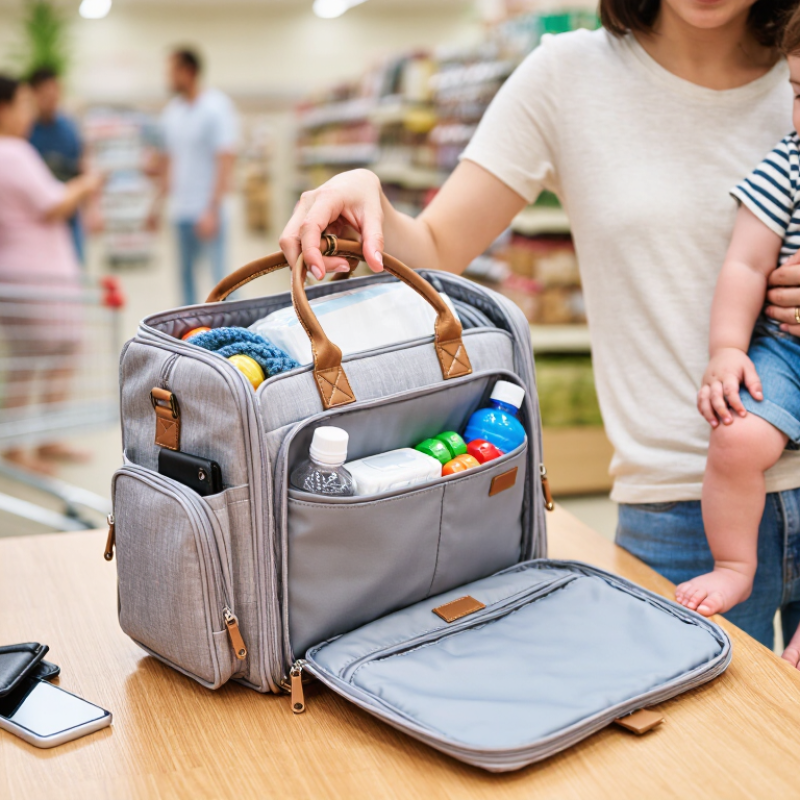
A good Diaper Bag is less about looking perfectly organized and more about making an ordinary outing easier. Picture a quick grocery run: one hand holds a small child, while the other searches for wipes beneath a spare sweater. A bag that opens easily and keeps essentials within reach can save time. A stylish bag that frustrates you may not.
Baby-gear expert Jamie Grayson is known for helping families assess baby products in practical terms. A useful paraphrase of that approach is: “Choose for the routine you actually have, not an imaginary perfect one.” Treat that as a guiding idea, not a one-size-fits-all rule. Your needs may change between a newborn’s frequent outfit changes and a toddler’s snacks, toys, and water bottle. And some days, even a well-packed bag feels chaotic.
This guide will help you compare capacity, compartments, carrying styles, materials, and cleaning needs. Think about where the bag will go: clipped to a stroller, carried through a crowded station, or tucked beneath a café table. Notice whether you can reach a diaper, wipes, and keys without emptying everything onto the floor. Consider how much weight feels comfortable on your shoulder. Then check whether the layout suits your habits, not just the product photos. There is no universally best choice. The right Diaper Bag should fit your child, your routine, and the small inconveniences you most want to avoid.
Identify Your Caregiving Needs and Daily Routine
Map your real day before choosing a diaper bag. Count the stops, transit rides, and hours between home and a reliable place to restock. A short stroller walk needs less than a full workday away. Note whether you carry bottles, expressed milk, formula, or nursing supplies. CDC’s 2022 Breastfeeding Report Card found that 83.2% of infants born in 2021 had ever been breastfed; 55.8% received breast milk at six months. Feeding routines vary, so choose compartments around your own supplies, not someone else’s checklist.
Think about who carries the bag, too. A caregiver switching between a car and a bus may value quick-access pockets and comfortable straps more than a large changing station. The National Diaper Bank Network’s 2023 State of Diaper Need report found that one in two U.S. families with young children experienced diaper need. A bag with room for a few spare diapers can help, but avoid packing every possible item; weight adds up fast. Plans change. I once assumed extra pockets would solve everything, then found that a wet cloth buried under spare clothes was still hard to reach. Test your layout at home: place wipes, a diaper, and a clean outfit where you can grab them with one hand. Then adjust it after a normal day out.
| Caregiving Routine | Typical Items to Carry | Useful Bag Features | Practical Capacity Guide | What to Prioritize |
|---|---|---|---|---|
| Short errands Trips lasting a few hours close to home | 2–3 diapers, wipes, a changing pad, one spare outfit, snacks or a bottle, and a small personal item | Lightweight design, easy-access pockets, wipe-clean lining, and a secure closure | Compact bag, approximately 10–18 L | Low weight and quick access to changing essentials |
| Full workday or daycare commute Regular trips with handoffs between caregivers | 4–6 diapers, wipes, 1–2 spare outfits, feeding supplies, a water bottle, and labeled personal items | Separate compartments, comfortable padded straps, a key clip, and space for a folder or small laptop | Medium-to-large bag, approximately 18–28 L | Organization, comfortable carrying, and easy-to-clean materials |
| Public transit or walking Daily outings where hands-free carrying matters | A small supply of diapers and wipes, a spare layer, feeding essentials, and personal belongings | Backpack-style straps, a stable shape, secure pockets, and a compact profile | Compact-to-medium bag, approximately 12–22 L | Even weight distribution, secure storage, and freedom of movement |
| Long outings or day trips Extended time away from home with limited access to supplies | Several diapers, wipes, multiple clothing layers, feeding supplies, snacks, and a small first-aid kit | Wide opening, multiple compartments, insulated pocket, sturdy straps, and a washable changing pad | Large bag, approximately 25–35 L | Room for extra supplies without making the bag difficult to carry |
| More than one child Caregiving for siblings with different ages or needs | Separate diaper and clothing supplies, snacks, drinks, and age-specific comfort items | Color-coded or clearly separated compartments, broad access, and durable construction | Large bag, approximately 25–35 L or more, depending on the outing | Clear organization so each child's essentials are easy to find |
| Feeding or pumping routine Carrying bottles, expressed milk, or pumping equipment | Bottles or feeding supplies, milk-storage containers, pump parts, wipes, and a change of clothes | Insulated pocket, leak-resistant lining, washable interior, and a separate compartment for clean equipment | Medium-to-large bag, approximately 18–30 L | Safe separation of clean, used, and temperature-sensitive items |
Capacity ranges are approximate. The best size depends on the child’s age, feeding needs, outing length, and whether you also carry personal or work items.