How to Choose Bathroom Hardware for Global Projects?

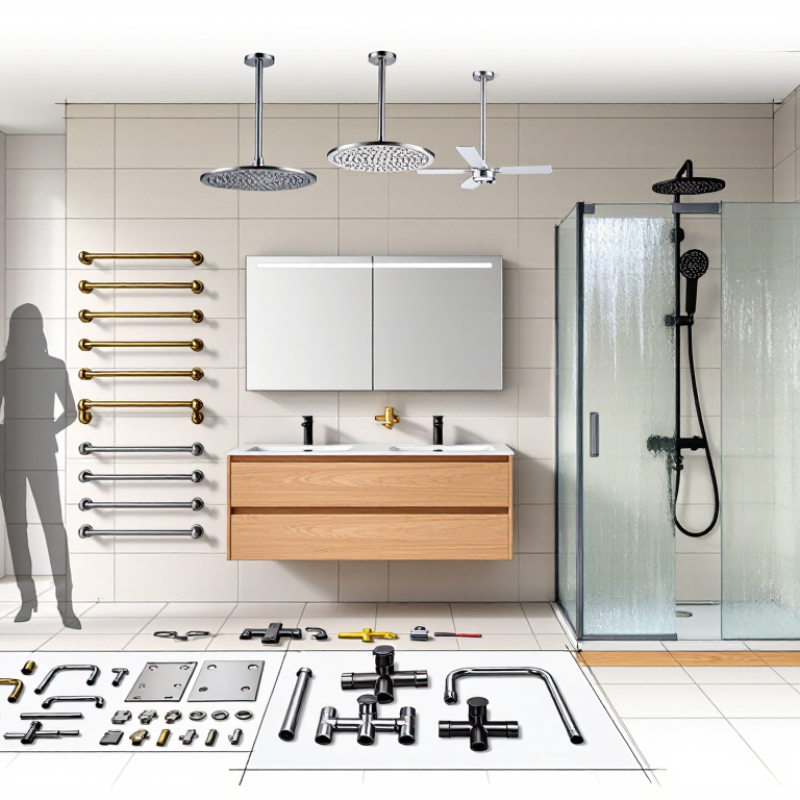
Choosing Bathroom Hardware for global projects requires more than comparing finishes and prices. A handle that performs well in a dry hotel may fail in a humid coastal resort. Project teams must consider climate, water exposure, cleaning chemicals, user frequency, and installation conditions. Stainless steel, brass, zinc alloys, and coated finishes each behave differently. Their appearance can also change under harsh maintenance routines.

Reliable selection begins with evidence. Review technical data, load ratings, corrosion resistance, surface treatments, warranty terms, and available test reports. Confirm that product dimensions match local plumbing layouts and accessibility requirements. Do not assume one specification suits every country. Regional standards, building practices, and replacement expectations can differ. Experienced teams often request samples and install them in a mock-up bathroom. This reveals sharp edges, loose fixings, awkward clearances, and cleaning problems before mass purchasing begins.

Bathroom Hardware should also support consistent delivery across borders. Check packaging strength, spare-part availability, installation instructions, and communication between manufacturers, contractors, and designers. A beautiful pull handle is not useful if replacement screws cannot arrive quickly. It sounds obvious, but projects still overlook it. Sustainability deserves careful review too, including material origin, repairability, recycled content, and product lifespan. No selection is perfect. A finish may resist corrosion yet show fingerprints easily. A lower-cost item may perform well, but its long-term support remains uncertain. The strongest decision combines tested performance, practical experience, clear documentation, and honest review of project risks.

How to Choose Bathroom Hardware for Global Projects?

Project Requirements and Bathroom Hardware Selection Criteria

Global bathroom hardware must match project conditions, not showroom appearance. Requirements vary with climate, water quality, user volume, and maintenance skills. The WHO/UNICEF Joint Monitoring Programme reported that 3.5 billion people lacked safely managed sanitation in 2022. That figure is sobering. Remote sites may need simple, repairable fittings rather than complex electronic controls.

Create a selection matrix before requesting quotations. Include water pressure, temperature range, corrosion exposure, expected daily cycles, spare-part access, and installation tools. For high-use facilities, test hinges, locks, grab bars, and valves against repeated operation. Specify stainless steel grades carefully, especially near coastlines or chlorinated water. Request test records, material declarations, and installation instructions. ISO 9227 salt-spray testing can support corrosion comparisons, but it cannot predict every building condition.

Water efficiency also requires evidence. The U.S. Environmental Protection Agency states that qualifying bathroom faucets use at least 30% less water than standard models. Confirm local flow-rate limits before applying that benchmark globally. Accessibility needs equal attention. Check local regulations, reach ranges, clearances, transfer spaces, and load requirements; ISO 21542 may provide useful reference guidance. A recurring mistake is selecting identical hardware for every region. It simplifies purchasing, but can create compatibility and service problems. No checklist is perfect. Review it with local installers before approval.

Material, Finish, and Durability Considerations for Global Markets

How to Choose Bathroom Hardware for Global Projects?

Bathroom hardware must survive different climates, water conditions, and maintenance habits. Material selection is the first decision. Stainless steel suits humid hotels and coastal properties because it resists corrosion. Solid brass offers strength for frequently used doors, faucets, and accessories. However, brass quality varies, so verify its composition and manufacturing controls. In areas with hard water, smooth surfaces reduce mineral buildup and simplify cleaning.

Finish affects both appearance and service life. Polished chrome remains practical because it handles regular cleaning and matches many interior styles. Brushed finishes can hide fingerprints and small scratches better. Dark finishes create strong visual contrast, but they may reveal limescale in regions with mineral-rich water. Surface treatments should be tested against local cleaners, salt exposure, and repeated wiping. A finish that performs well in a showroom may age differently on a busy project.

Tips: Request material samples before approval. Test them with local water and cleaning products. Check coating adhesion, salt-spray resistance, and color consistency. For high-traffic projects, inspect hinges, screws, and mounting points rather than judging only the visible surface. One overlooked screw can cause early rust. No material is perfect. Design teams should document expected maintenance, because durability also depends on installation quality and daily care. When project conditions are uncertain, a conservative finish and replaceable components may be wiser than a fashionable choice.

Compatibility with Local Plumbing Standards and Installation Systems

How to Choose Bathroom Hardware for Global Projects?

Compatibility with Local Plumbing Standards and Installation Systems

Bathroom hardware can look identical across markets, yet its connections may differ completely. Before ordering, confirm local pipe sizes, thread types, water pressure, and hot-cold orientation. BSP and NPT threads are not interchangeable without approved conversion parts. A small mismatch can cause leaks behind finished walls.

I have seen projects delayed because a concealed valve did not match the local rough-in depth. Check wall thickness, mounting brackets, drainage positions, and service access before production. For wall-mounted fixtures, request a clear installation drawing with dimensions in the site’s preferred units. Confirm whether the installer uses flexible hoses, rigid pipes, or a modular carrier system.

Local certification requirements also matter. Ask the project engineer to verify materials, pressure ratings, temperature limits, and backflow protection. Test connections before tiling or sealing access panels. This simple step can expose weak joints early. Do not assume an adapter solves every problem; it may change alignment or reduce flow. On one project, the selected hardware passed a factory test but failed after local pipework was installed. The lesson was uncomfortable: product quality alone does not guarantee system compatibility. Site conditions deserve equal attention.

How to Choose Bathroom Hardware for Global Projects?

Typical nominal connection sizes by regional plumbing practice

The chart compares commonly specified nominal sizes for faucet supplies, basin wastes, and bath wastes. A 1/2-inch connection may use different thread systems, such as NPT in North America or BSP/G threads in many other markets, so nominal size alone does not confirm compatibility. Always verify thread form, pitch, sealing method, local installation rules, and available adapters before finalizing hardware.

Accessibility, Safety, and Maintenance Requirements Across Regions

How to Choose Bathroom Hardware for Global Projects?

Accessibility, Safety, and Maintenance Requirements Across Regions

Bathroom hardware must respond to real users, not only drawings. Start with regional accessibility codes and consult a qualified local professional. Requirements for clearances, grab-bar placement, door operation, and turning space can differ significantly. Lever handles often support users with limited hand strength. High-contrast finishes can also help people with reduced vision. Avoid sharp edges and slippery projections near showers. Small details matter.

Safety depends on location and daily use. Specify load-rated grab bars with secure wall backing, especially in hotels, hospitals, and public facilities. Thermostatic or anti-scald controls may reduce burn risks where hot water systems fluctuate. In humid coastal areas, corrosion-resistant materials deserve serious attention. Hard water can leave mineral deposits around valves and aerators. Cleaning chemicals may damage certain finishes. Test samples before approving large quantities.

Maintenance planning is often overlooked. Choose components with accessible fixing points, replaceable cartridges, and locally available spare parts. Record installation details for future teams. A bathroom that looks excellent on opening day can become difficult six months later. I have seen beautiful fittings fail because technicians could not reach concealed connections. That mistake was avoidable. It is also wise to review cleaning routines with facility staff, since ideal specifications sometimes ignore actual working habits. No single hardware schedule suits every region or building type.

Supplier Evaluation, Quality Control, and International Compliance Checks

How to Choose Bathroom Hardware for Global Projects?

Selecting bathroom hardware for international projects requires more than comparing finishes and prices. A reliable supplier should provide factory profiles, production records, material certificates, and recent quality reports. Ask who controls incoming metals, plating thickness, thread accuracy, and final assembly. A factory tour, even through live video, can reveal storage problems that documents may hide.

Quality control must follow the product’s real use. Test hinges, handles, brackets, and fittings through repeated cycles, moisture exposure, salt spray, and load checks. Inspect samples under bright light. Look for uneven coating, sharp edges, loose screws, and color differences between batches. Request a written inspection plan with acceptance limits. Small defects become expensive after installation.

Tips: Keep one approved reference sample. Record its weight, dimensions, finish, and packaging. Require batch photos before shipment. Verify certificates with the issuing laboratory when possible. Check whether testing covers the destination market, not only the manufacturing country. Requirements may differ for materials, water contact, labeling, packaging, and chemical restrictions. Supplier promises are useful, but traceable evidence is stronger. I have seen attractive samples fail because production used a different alloy. That mistake is easy to miss. No checklist is perfect. Recheck critical points before every shipment.

How to Choose Bathroom Hardware for Global Projects? - Supplier Evaluation, Quality Control, and International Compliance Checks
Evaluation Area Data Dimension Practical Requirement or Benchmark Verification Evidence Priority
Supplier Evaluation Quality management system The supplier should operate a documented quality management system covering purchasing, production, inspection, nonconformity handling, corrective action, and record retention. Valid ISO 9001 certificate, certification scope, recent surveillance information, internal audit records, and corrective-action samples. Required
Supplier Evaluation Production capability Confirm that the supplier can control machining, casting, forming, plating, coating, assembly, and final inspection in accordance with approved drawings and specifications. Process-flow chart, equipment list, production capacity, maintenance records, operator training records, and process-control plans. Required
Supplier Evaluation Traceability Each production lot should be traceable to raw materials, critical components, production date, inspection results, and shipment records. Lot coding procedure, material certificates, batch records, inspection reports, and sample recall or traceability exercise. Required
Supplier Evaluation Change control No change to materials, dimensions, surface treatment, manufacturing location, or critical components should be made without documented approval. Engineering-change procedure, change-notification template, approval workflow, and records of previous changes. Required
Material Control Base material composition Specify the alloy or grade for each load-bearing, water-contact, and corrosion-sensitive component. Material selection should match the project’s water quality and installation environment. Material declarations, mill certificates, third-party composition testing, and incoming material inspection records. Required
Material Control Potable-water contact suitability For products connected to drinking-water systems, verify compliance with the rules applicable in the destination market. Requirements may include limits for lead, nickel release, other substances, and hygienic effects. Destination-market approval or test report, material declaration, migration or extraction test results, and installation-use instructions. Conditional
Quality Control Dimensional and functional inspection Check critical dimensions, thread compatibility, cartridge or valve operation, flow direction, mounting interfaces, seals, and installation clearances against approved drawings. Approved inspection plan, calibrated measurement records, first-article inspection report, functional test results, and gauge calibration certificates. Required
Quality Control Leak and pressure testing Water-bearing assemblies should be tested for leakage and pressure resistance using the pressure, duration, and acceptance criteria specified by the applicable product standard or project specification. Pressure-test procedure, calibrated gauge records, test logs by lot, and failed-test corrective-action reports. Required
Quality Control Surface finish and coating adhesion Inspect visible surfaces for pits, blisters, peeling, discoloration, sharp edges, and inconsistent coverage. Coating adhesion and thickness should meet the approved specification. Visual inspection standard, coating-thickness readings, adhesion-test results, approved color or finish sample, and defect limit table. Required
Quality Control Corrosion resistance Use a defined corrosion test appropriate to the finish and destination market. ISO 9227 and ASTM B117 describe salt-spray testing methods; the required exposure duration and acceptance criteria must be agreed in advance. Independent or controlled laboratory report, test-panel photographs, exposure conditions, specimen preparation details, and pass/fail criteria. Recommended
Quality Control Sampling and acceptance Use a documented sampling plan for incoming, in-process, and final inspection. ISO 2859-1 provides an internationally used attribute-sampling framework, but sample size and acceptance limits should reflect product risk. Inspection-level selection, AQL or project-specific acceptance criteria, lot definition, sampling records, and nonconforming-lot disposition. Required
International Compliance Destination-market product standard Confirm the required standard for the product type and market. For example, EN 817 covers mechanical mixing valves for water supply systems, EN 1111 covers thermostatic mixing valves, and EN 248 addresses electroplated coatings on sanitary tapware. Current test report or certificate identifying the exact model, configuration, material, standard edition, laboratory, and validity information. Conditional
International Compliance Plumbing connection compatibility Verify thread type, nominal size, hose connection, pressure range, temperature range, and installation method for the destination plumbing system. Metric and non-metric connection requirements may differ by market. Dimensioned drawings, thread gauges, connection samples, installation instructions, and compatibility confirmation from the local engineering team. Required
International Compliance Documentation and labeling Packaging and technical documents should state model identification, materials where required, installation instructions, operating limits, maintenance requirements, warnings, and applicable conformity information. Approved artwork, multilingual instruction manual, declaration documents, carton markings, barcode data, and document-control revision history. Required
International Compliance Restricted substances Screen metals, plating chemicals, plastics, sealants, and packaging against the restricted-substance rules applicable to the destination market and project contract. Supplier material declaration, laboratory screening where risk is high, safety data sheets, and documented chemical-substance review. Conditional
Project Delivery Pre-shipment inspection Before shipment, verify quantity, model mix, appearance, dimensions, accessories, packaging protection, labeling, and randomly selected functional samples. Pre-shipment inspection checklist, photographic record, carton and pallet inspection, approved sample comparison, and signed release report. Required
Project Delivery Packaging and logistics protection Packaging should prevent scratching, impact damage, moisture exposure, component loss, and mix-ups during international transport and site storage. Packaging specification, drop or transport-risk assessment where appropriate, desiccant or moisture-control method, and shipping inspection records. Recommended
After-Sales Support Spare parts and warranty support Define the warranty period, exclusions, response time, spare-part availability, replacement procedure, and responsibility for field failures before contract award. Warranty terms, spare-parts list, service-level agreement, failure-analysis procedure, and records of corrective actions from previous projects. Required
Start typing to see products you are looking for.
Sign in

No account yet?

NewSale
SHARE YOUR CART