



China Best PVC Cabinet Manufacturers and Suppliers?

Choosing China’s best PVC cabinet manufacturers and suppliers takes more than comparing glossy door samples. Buyers need to check board composition, edge sealing, hardware, production consistency, and export experience. A showroom door may look flawless; the cut edge and hinge alignment reveal more.

Industry reports provide useful context, but not a ready-made supplier ranking. The Freedonia Group’s World Cabinets coverage examines cabinet demand and market structure, while Grand View Research’s PVC market analysis covers the wider material sector. Neither should be treated as proof that a specific factory makes superior PVC Cabinets. Market size is not product quality. Ask suppliers for current specifications, test documentation, sample panels, and clear warranty terms.

A named expert quotation cannot be responsibly included without a verifiable source; none was provided for this request. Inventing one would weaken trust. This guide instead focuses on checks buyers can repeat: inspect a sample under strong light, test door alignment, review moisture-related claims, and confirm what “PVC” means in the supplier’s construction. Details matter. A thin decorative surface over an unsuitable core is not the same product as a well-built cabinet system. The following comparison will help buyers assess Chinese manufacturers and suppliers with evidence, not slogans.
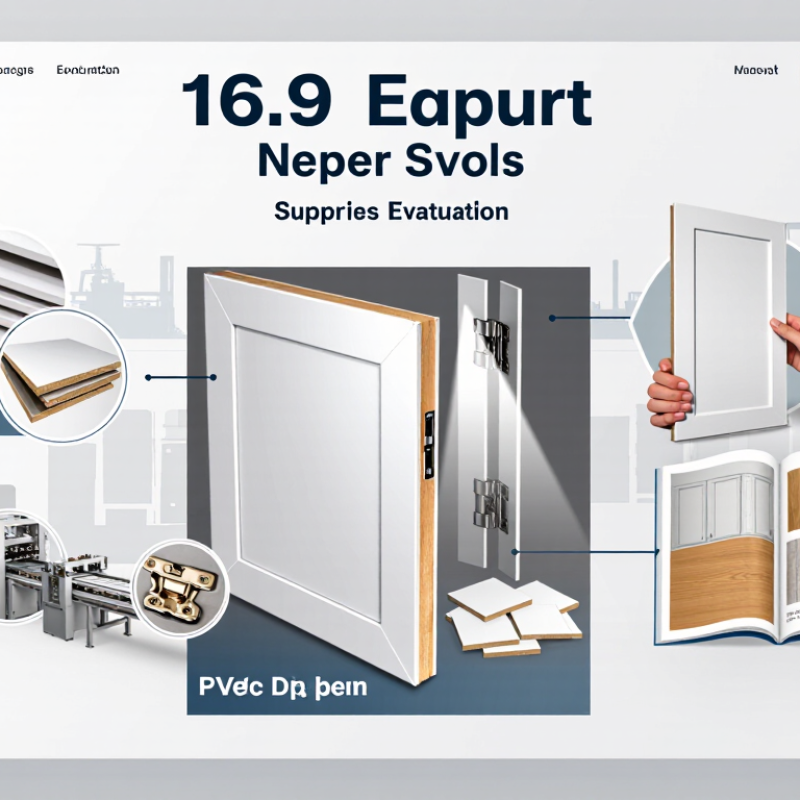
China Best PVC Cabinet Manufacturers and Suppliers?

PVC Cabinet Basics: Resin Composition and Common Board Types

PVC cabinet boards are made from PVC resin blended with additives, rather than from solid resin alone. Stabilizers support processing and heat resistance, while impact modifiers can help reduce brittleness. Pigments create color, and mineral fillers affect stiffness, weight, and surface feel. Exact recipes vary by producer, so two white boards may behave differently when cut or screwed.

Common board types include free-foam PVC, Celuka foam board, and rigid PVC sheet. Free-foam boards are lighter, with a relatively even cellular core. Celuka boards have a denser outer skin, which can provide cleaner edges and better screw-holding than softer foam grades. Rigid sheets are denser and may suit thinner panels or parts needing a firmer surface. In a cabinet workshop, check the cut edge, panel flatness, and hinge-screw grip—not just the sample face. Small details matter. A board may resist splashes, yet poorly sealed joints or weak hardware can still cause trouble. That sounds simple. It isn’t. I would also ask for thickness tolerance and load guidance, because a slightly bowed door is frustrating, even when the panel remains intact.

PVC Cabinet Basics: PVC Resin Composition by Mass

The chart shows the theoretical elemental composition of the PVC repeat unit (C₂H₃Cl), not a finished cabinet board formulation. PVC cabinet boards may be solid foam, Celuka (skin-foam), or co-extruded constructions. Their additives and layered structures vary by product, so the actual composition of a board is not represented by these figures.

PVC Resin Contains About 57% Chlorine by Mass

China Best PVC Cabinet Manufacturers and Suppliers?

PVC Resin Contains About 57% Chlorine by Mass

Pure PVC resin contains about 57% chlorine by mass. The figure comes from its repeating chemical unit, which includes carbon, hydrogen, and chlorine. In a cabinet panel, however, the material is rarely pure resin. Manufacturers blend it with stabilizers, pigments, impact modifiers, and sometimes mineral fillers. The finished product’s chlorine percentage can therefore differ. That distinction matters.

For cabinet buyers, the percentage is a material fact, not a simple quality score. It does not tell you on its own whether a door will resist moisture, keep its color, or hold a screw securely. Ask suppliers for the panel’s composition, thickness, surface finish, and test details. Check a cut edge for voids, and inspect the corners for clean, even bonding. Small details count. A glossy sample may look convincing under showroom lights, yet tell little about how it performs in a humid kitchen. I would also compare several samples; one attractive panel is not enough evidence. Resin chemistry offers useful context, but careful inspection and clear technical records give a more dependable basis for choosing cabinet materials.

PVC Foam Board Specs: Common 5–18 mm Sheet Thicknesses

PVC foam board for cabinet doors, carcasses, and decorative panels is commonly available in thicknesses from 5 to 18 mm. Choose by application, not just the number on the label. A 5 mm panel may suit lightweight inserts or back panels, while 8–10 mm boards can work for modest interior components. For shelves, doors, or wider spans, 12–18 mm stock is often considered for added rigidity. It is not a guarantee.

Density, cell structure, and surface skin also affect performance. Two 18 mm sheets can feel quite different in hand. Check supplier data for density, flatness, thickness tolerance, and machining guidance. A small sample helps. Test a sample. Saw an edge, drill a pilot hole, and check whether the cut stays clean or the surface chips. These details are easy to overlook.

Before production, test screw placement and hinge loads on the actual board grade. Foam PVC is lighter than many solid panels, but screw retention varies with board structure and formulation. A 5 mm sheet may flex across a wide opening; an 18 mm sheet may add weight without correcting weak support. Ask suppliers about thickness consistency across each sheet, rather than relying only on nominal specifications. The best choice still depends on cabinet design and expected use.

How to Evaluate Chinese Manufacturers: Quality Systems and Test Data

When comparing Chinese PVC cabinet manufacturers, ask how quality controls work on an ordinary production day. A certificate is a starting point, not proof that every cabinet meets your specification. ISO’s 2022 Survey of Certifications reported 1,265,216 valid ISO 9001 certificates worldwide. That scale makes the distinction important: check the factory’s current certificate scope, audit records, and corrective-action logs. Ask how resin batches, panel thickness, color, and edge bonding are recorded from incoming material to finished goods.

Request recent test reports for the exact panel and cabinet construction you plan to buy. Reports should identify the sample, test method, date, conditioning, and measured result—not just say “passed.” For assembled units, ask for evidence on shelf loading, door-cycle durability, dimensional stability, and resistance to household cleaners. Standards such as EN 14749 address safety and strength for domestic storage furniture; confirm which clauses apply to your product. Check that the testing laboratory and report details can be independently verified. Numbers matter. Compare results across samples, not only against a supplier’s own limit. I still find paperwork can look tidy while a cut edge swells or a hinge loosens in use. Ask to inspect production samples, and record any mismatch before approving shipment.

Supplier Comparison: Customization, Minimum Orders, and Export Lead Times

When comparing China-based PVC cabinet manufacturers and suppliers, ask for the same specification from each: board thickness, surface finish, edge treatment, hardware, and packaging. Customization often changes both price and production time. A color sample may be quick; matching a specific texture or modifying cabinet dimensions can require new setup and approval. Request a written sample schedule, drawing sign-off point, and list of included accessories. Details matter.

Minimum order quantities need context. A supplier may accept a small trial order but charge more per unit, limit color choices, or require full-sheet material purchases. Ask whether the minimum applies per design, color, or total shipment. Then compare the landed cost, not just the unit quote. Small print counts.

Export lead times should separate production from transit. UNCTAD’s Review of Maritime Transport 2024 reported that maritime trade grew 2.4% in 2023, while warning that route disruptions and uncertainty affect shipping. That figure is not a delivery-time guarantee. Ask suppliers to state production days, port handover estimates, and the buffer they recommend for peak periods. A useful comparison also checks how delays are communicated. One weak point: buyers sometimes accept “ready in 30 days” without confirming whether that means factory completion or departure from port.

China Best PVC Cabinet Manufacturers and Suppliers? — Supplier Comparison: Customization, Minimum Orders, and Export Lead Times

The comparison below uses supplier categories rather than company names. Figures are indicative planning ranges, not verified offers from individual factories; actual minimum orders, specifications, and delivery schedules depend on the project, materials, order season, and shipping terms.

Supplier Profile Customization Typically Available Indicative Minimum Order Indicative Production Lead Time Export and Packaging Considerations Best Fit What to Confirm Before Ordering
Project-focused cabinet fabricator Made-to-measure layouts, cabinet dimensions, door styles, colors, hardware options, and room-by-room configurations. Ask whether drawings and a bill of materials are included. Often quoted by project; a single kitchen or bathroom project may be considered, subject to setup costs and factory policy. Approximately 25–45 working days after approved drawings, confirmed specifications, and deposit. Confirm export-grade corner protection, moisture-resistant packing, carton markings, and whether the quote is EXW, FOB, or another Incoterm. Renovations, residential projects, and buyers needing a tailored layout. Final dimensions, measurement responsibility, drawing approval process, hardware brands or specifications, and replacement-part policy.
Batch-production cabinet factory Standard cabinet modules with selectable finishes, sizes, door designs, and hardware. Custom dimensions may require a larger order or longer production time. Commonly quoted by cabinet set or production batch; small trial orders may carry a setup or unit-price premium. Approximately 20–40 working days for a confirmed batch, depending on order size and material availability. Request carton dimensions and gross weight for freight planning. Confirm labeling, palletization, and packing suitable for the destination market. Importers, contractors, and distributors ordering repeatable configurations. Whether the quoted price covers standard accessories, packaging, inspection, and any changes to standard sizes or finishes.
Modular or ready-to-assemble supplier Typically offers fixed module sizes and a narrower range of colors and accessories; custom combinations may be possible within the modular system. May accept smaller trial quantities for standard items; customized colors or components can require a batch minimum. Approximately 15–35 working days for standard configurations; special finishes or components can extend the schedule. Flat-pack packaging can reduce shipping volume, but assembly instructions and hardware kits should be checked for completeness and clarity. Online retailers, smaller importers, and projects using standard cabinet dimensions. Assembly requirements, module compatibility, spare hardware availability, and whether samples match production color and finish.
Custom PVC-board cabinet specialist May work with PVC foam board or other specified PVC-based panels and offer custom cutting, edge details, and cabinet layouts. Construction methods vary by supplier. Usually determined by project scope and panel utilization; confirm whether one-off prototypes are accepted. Approximately 25–45 working days after material and drawing approval; non-standard panel colors may affect timing. Confirm panel identification, protective film, moisture protection, and packing methods that limit surface damage in transit. Buyers prioritizing PVC-based panel construction or non-standard room layouts. Exact panel type, thickness, density or technical data where available, joining method, load requirements, and written material specifications.
OEM or private-label supplier Can offer product and packaging adjustments within the factory’s capabilities. Custom logos, labels, colors, or packaging may require separate approval and order quantities. Often higher for customized packaging or components than for unbranded standard products; obtain separate minimums for each item. Approximately 30–50 working days for customized orders, excluding sample approval and international transit. Agree on artwork approval, carton labeling, barcode requirements, packing tests, and ownership of any custom tooling or designs. Established importers and distributors building a consistent private-label range. Sample-to-production consistency, customization charges, tooling costs, quality inspection criteria, and responsibility for packaging artwork.

Lead times are indicative production estimates and exclude sample development, drawing revisions, customs clearance, and ocean or air transit. Request a written quotation, approved drawings, material specifications, and a shipment schedule before placing an order.

Start typing to see products you are looking for.
Sign in

No account yet?

NewSale
SHARE YOUR CART