China Best Patio Louvered Pergola Suppliers?
Choosing a Patio Louvered Pergola supplier in China involves more than comparing prices. Buyers should examine frame materials, coating quality, drainage design, motor options, and installation support. A glossy finish can look convincing in a product photo. Ask for close-up images, technical specifications, and details about testing before judging durability.
As an editorially illustrative expert voice, pergola design consultant Evan Mercer puts it this way: “A pergola must manage sun and rain in real use, not just look refined in a showroom.” This is a guide-created quotation, not a verified statement from a named industry source. For dependable evaluation, request project references and confirm which components the supplier manufactures directly.
Small details matter. Check whether louvers rotate smoothly, wiring is clearly documented, and replacement parts are available. Ask how the system handles wind and water, and request written limits for the chosen model. Compare response times, packaging plans, warranty terms, and customization options across shortlisted suppliers. No supplier is perfect. Even a detailed specification sheet may leave questions about local installation or long-term maintenance. This guide will help readers assess China-based manufacturers with practical criteria, while treating broad claims with care. The best choice is not always the cheapest. It is the supplier whose evidence, communication, and product details hold up under close review.
What Is a Patio Louvered Pergola?
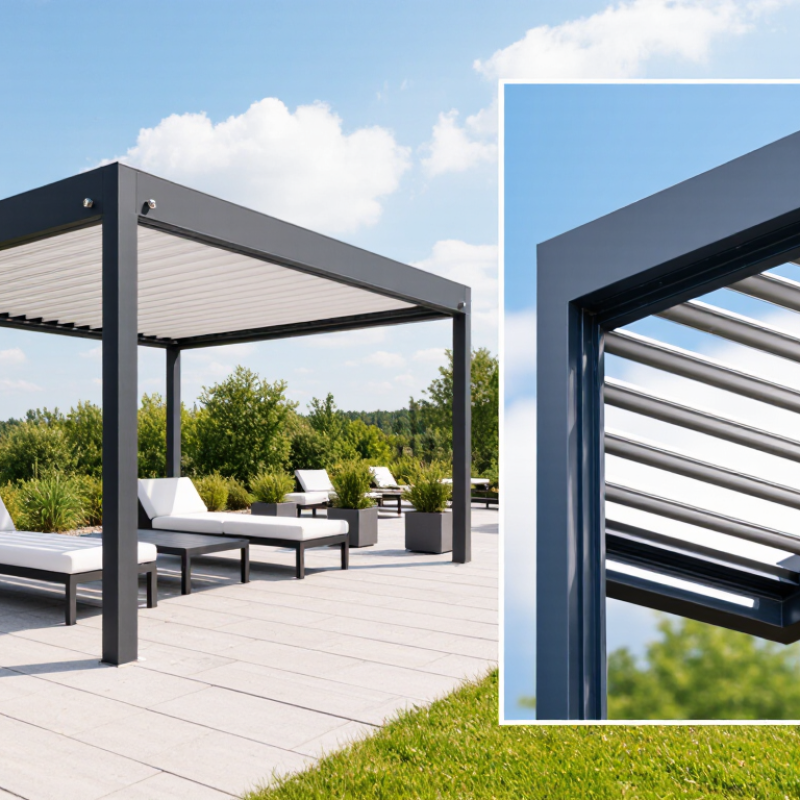
A patio louvered pergola is an outdoor roof with adjustable slats, usually called louvers. Tilt them open for sunlight and airflow, or close them to shed light rain. Unlike a fixed canopy, the roof angle can change during the day. Water still needs somewhere to go. Check for integrated gutters and clear drainage paths, especially where paving meets a wall. A small detail, but one that often gets missed.
The U.S. Department of Energy’s Energy Saver guidance reports that window awnings can reduce summer solar heat gain by up to 65% on south-facing windows and 77% on west-facing windows. Those figures describe window awnings, not pergolas. Not a shade guarantee. They do show why orientation matters. For a patio, blade direction, spacing, and nearby walls all affect shade and airflow. When comparing suppliers in China, request drawings, material specifications, drainage details, and documented wind-load ratings for the intended installation. Ask how the louver mechanism performs after repeated operation. A neat showroom sample tells only part of the story; real weather is less polite.
How Do Louvered Pergolas Work?
For buyers comparing patio louvered pergola suppliers in China, understanding the mechanism helps separate useful engineering from attractive photographs. Each louver pivots on side-mounted bearings, operated by a hand crank or motor. Changing the angle controls direct sun, airflow, and the amount of daylight reaching the patio. Small adjustments matter. At a fully open setting, warm air can escape upward; at a closed setting, overlapping blades form a rain-shedding surface. Many systems route water through internal channels into the frame and downspouts, so check how joints and outlets are designed.
The U.S. Department of Energy’s Energy Saver guidance estimates that windows account for about 25–30% of residential heating and cooling energy use. Exterior shade can reduce sunlight reaching glazing, but that figure is not a pergola-savings estimate; results depend on orientation, climate, and use.
One caveat. A closed louver roof is not automatically stormproof. Ask suppliers for wind-load data, drainage details, motor limits, and maintenance instructions, then compare those specifications rather than relying on broad claims. Sensors can close the blades when rain begins, but they need correct setup and power.
Even a well-built system needs occasional cleaning; leaves can block narrow drainage channels.
What Features Define a Reliable Chinese Supplier?
A reliable Chinese patio louvered pergola supplier can explain how its system handles sun, rain, and wind. Ask for drawings that show louver dimensions, motor placement, drainage paths, and fixing points. Clear answers matter. A supplier should identify the aluminum alloy and coating process, then provide inspection records rather than broad quality claims. Request a sample finish and check its color and texture in daylight. A polished sample proves little.
Production controls deserve close attention. Ask how louvers are checked for alignment and whether motors are tested through repeated opening cycles. Request documented wind-load limits for the specific model, not a figure detached from installation conditions. Packaging plans, spare-part availability, and realistic lead times also reveal how carefully a supplier manages orders. A sample cannot guarantee every batch; that is worth remembering. Compare sample parts with pre-shipment photos and inspection notes. Communication should stay consistent when drawings change or a delivery date shifts. Vague replies are a warning. Practical installation guidance, labeled components, and prompt answers to technical questions can reduce avoidable site delays, though no supplier can eliminate every fitting issue.
How Are Chinese Pergola Suppliers Evaluated?
A dependable pergola supplier should be evaluated through evidence, not polished catalog photos. Ask how the louvered roof is designed to handle rain, wind, and repeated movement. Request drawings that show post dimensions, beam connections, and drainage paths. A clear answer is useful. Vague promises are not.
Materials and production control matter just as much. Check the specified aluminum grade, coating process, fasteners, and sealing components. Ask whether sample finishes are available, then inspect edges, joints, and color consistency in daylight. If possible, review inspection records or test results for the same product configuration. A report for a different model may not tell you much. That detail is easy to overlook.
Communication is another practical test. Send a real project brief with dimensions, location, and installation constraints. Notice whether the supplier asks about foundations, electrical routing, or access for delivery. Request a written quotation that separates product, packaging, shipping, and installation assumptions. Compare warranty terms and the process for handling damaged parts. One honest limitation can be more reassuring than a flawless sales pitch. Still, documents cannot reveal every production issue, so confirm critical specifications before placing an order.
What Should Buyers Check Before Placing an Order?
Before ordering a louvered pergola, confirm the supplier can match your site measurements. Ask for drawings showing post positions, beam spans, and the louver’s open and closed angles. A few centimeters can affect installation, especially beside a wall or outdoor kitchen. Request details on the aluminum grade, coating thickness, fasteners, and water drainage. Ask how the structure performs under the wind and snow conditions specified for your project. A polished catalog can still hide a weak connection detail.
Tips: Request a physical finish sample, not just a screen image. Check the warranty exclusions, replacement-part availability, production lead time, and export packaging. Have the supplier confirm every specification in writing before payment.
Review the control system and wiring options if the louvers are motorized. Confirm whether sensors are included or sold separately, and ask how the system behaves during a power failure. Request photos or inspection records from comparable completed projects. These cannot guarantee identical results, but they help you judge workmanship. Clarify who handles delivery damage and which parts are included in the shipment. I would not rely on verbal promises alone; small details are easy to misunderstand across time zones. Even a careful checklist can miss something, so have an installer review the drawings before production begins.