





How to Find the Best TV Cabinet Wall Unit Supplier in China?
Finding the right Tv Cabinet Wall Unit supplier in China requires more than comparing catalog photos and factory prices. A reliable partner should understand furniture design, material performance, packaging, and export coordination. The strongest suppliers can explain their production process clearly, from board cutting and edge sealing to final inspection.
Look beyond polished images. Ask for recent factory videos, material samples, product drawings, and references from comparable projects. A cabinet may look elegant online but feel unstable when its doors open. Check board thickness, hinge quality, surface resistance, cable management, and wall-mounting support. Request a sample or prototype before approving bulk production. Small details matter.
A professional supplier should also provide consistent specifications, realistic lead times, and clear quality-control records. Examine how the Tv Cabinet Wall Unit is packed. Corner protectors, foam placement, moisture barriers, and carton strength can decide whether the product arrives safely. Confirm labeling, documentation, and shipping responsibilities in writing.
Price still matters. It should not be the only measure. An unusually low quotation may hide thinner panels, weaker hardware, or limited after-sales support. No supplier is perfect. Even careful research has blind spots. That is why communication tests are valuable. Notice how quickly the supplier answers technical questions and handles revisions. A dependable factory welcomes inspection and admits limitations. With evidence, practical testing, and steady communication, buyers can choose a China supplier with greater confidence and fewer costly surprises.
Define Your TV Cabinet Wall Unit Requirements
Define Your TV Cabinet Wall Unit Requirements
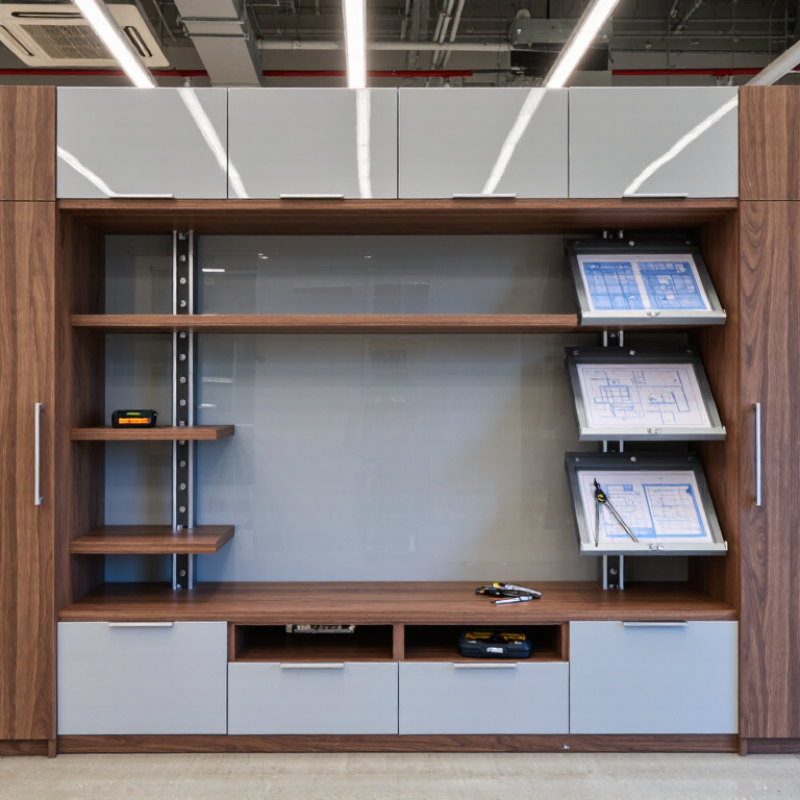
Before contacting a Chinese supplier, define the wall unit as a measurable product, not a general idea. Record your TV size, wall width, ceiling height, and viewing distance. A 65-inch television needs different proportions from a 55-inch model. Mark the socket positions, cable routes, soundbar space, and ventilation gaps. Also decide whether the cabinet will be wall-mounted, floor-standing, or combined. These details reduce quotation errors and make supplier comparisons fair.
Material choices need equal attention. Specify board type, thickness, edge treatment, surface finish, load capacity, and hardware quality. According to CSIL’s World Furniture Outlook 2024, China remains a leading global furniture manufacturing and export center. Statista Market Insights also forecasts China’s furniture market to exceed US$100 billion in 2024. Scale is useful, but it does not guarantee precision. I have seen attractive drawings fail because cable openings were missing or wall measurements were assumed.
Tips: Prepare a one-page requirement sheet with drawings, dimensions, finish samples, packaging expectations, and inspection points. Ask for a pre-production sample or detailed prototype images. Confirm carton size and installation instructions before ordering. Small omissions become expensive. Allow tolerance for uneven walls, because real homes rarely match perfect drawings. Recheck every measurement.
How to Find the Best TV Cabinet Wall Unit Supplier in China? - Define Your TV Cabinet Wall Unit Requirements
Use this example project brief to clarify your needs before requesting quotations. Adjust the example specifications to suit your room, market, and installation conditions.
| Requirement | Details to Define | Example Project Specification | Why It Matters |
|---|---|---|---|
| Overall dimensions | Maximum width, height, and depth; whether dimensions include trim, handles, or wall panels. | Approx. 2,400 mm wide × 2,000 mm high × 400 mm deep; final dimensions to be confirmed against the room drawing. | Confirms the unit will fit the intended wall and helps suppliers estimate materials and shipping volume. |
| TV size and placement | TV screen size, mounting method, viewing height, and required clearance around the screen. | Designed around a 65-inch TV, with a clearly dimensioned opening or mounting area. | Screen dimensions and mounting points vary by model, so the actual TV or its technical drawing should be checked. |
| Layout and storage | Number and position of cabinets, drawers, open shelves, display sections, and cable-access openings. | One central TV area, two closed base cabinets, and open shelving on one side. | A defined layout makes quotations comparable and reduces the chance of mismatched storage or cable access. |
| Wall and installation conditions | Wall width, floor level, wall construction, skirting boards, nearby outlets, and installation access. | Installation drawing to show wall dimensions, outlet locations, and any skirting-board clearance required. | Wall-mounted components need suitable fixing points; the installer should confirm the wall and anchoring method. |
| Materials and construction | Specify panel material, thickness, edge treatment, hardware, and any solid-wood or veneer components. | Request the proposed panel specification, hardware details, and finish samples for approval before production. | Material names alone do not fully describe construction; request written specifications for the actual components. |
| Finish and color | Color reference, sheen, texture, grain direction, and finish requirements for visible surfaces. | Matte neutral finish; approve a physical sample against the project color reference. | Screen images may not show color or texture accurately, so sample approval helps align expectations. |
| Load and support | Expected weight of the TV and stored items; support points and any mounting hardware requirements. | Provide the TV model or weight and request the supplier's stated load limits for shelves and mounting components. | Load capacity should be confirmed for the proposed design and installation; do not rely on appearance alone. |
| Cables and ventilation | Locations for cable ports, power access, media devices, and airflow around equipment. | Show cable routes and equipment locations on the drawing; confirm clearances for the selected devices. | Planning these details early helps avoid blocked sockets, visible cables, and insufficient equipment space. |
| Order quantity and customization | Quantity, one-off or repeat order, custom dimensions, and any requested design changes. | Request a quotation for the intended quantity and separately identify any custom-size or custom-finish options. | Minimum order quantities and customization terms vary by supplier and should be confirmed in the quotation. |
| Packaging and delivery | Delivery destination, packaging method, shipping terms, shipment dimensions, and installation needs. | Request packaged dimensions, gross weight, packing details, and delivery terms for the destination market. | These details help estimate freight, plan handling, and check whether the goods can pass through the delivery route. |
| Schedule and approval process | Required delivery date, sample approval, drawing approval, production schedule, and inspection points. | Ask the supplier to provide a written timeline covering drawing confirmation, sample approval, production, and dispatch. | A documented schedule makes dependencies and approval deadlines visible before an order is placed. |
| Standards and documentation | Destination-market requirements, requested test reports, material documentation, and product labeling. | List the applicable requirements for the destination market and request relevant documentation for the quoted product. | Applicable requirements depend on the product and destination; confirm them with the supplier and relevant authorities. |