





What Is the Best Robotic Pool Cleaner in 2026?

Choosing the best Robotic Pool Cleaner in 2026 is less about finding the most expensive model and more about matching a machine to your pool. A compact cleaner may suit a small above-ground pool, while a large in-ground pool can demand longer runtime, stronger filtration, and reliable wall climbing. The details matter: tile lines, leaves in the basket, and how often the unit needs rescuing from a step.

Market reports show why this category deserves careful comparison. Grand View Research’s robotic pool cleaner market analysis estimated the global market at about US$1.1 billion in 2023 and projected continued growth through 2030. That estimate signals rising interest, not proof that every new model performs well. The Pool & Hot Tub Alliance’s industry reports also help frame the wider pool market, but they do not independently rank individual cleaners. Numbers need context.

This guide will compare cleaning coverage, debris capacity, cord or battery design, app controls, maintenance, warranty, and verified price. Short product demonstrations can miss a frustrating truth: fine dust may behave differently from oak leaves, and a cleaner that climbs walls may still leave corners untouched. No single model wins every pool. We will distinguish manufacturer claims from documented specifications and explain where evidence is limited. A little skepticism helps. Check your pool’s shape and surface before trusting a feature list; the best choice should reduce weekly work, not add another device to troubleshoot.
What Is the Best Robotic Pool Cleaner in 2026?

What a Robotic Pool Cleaner Is and How It Works

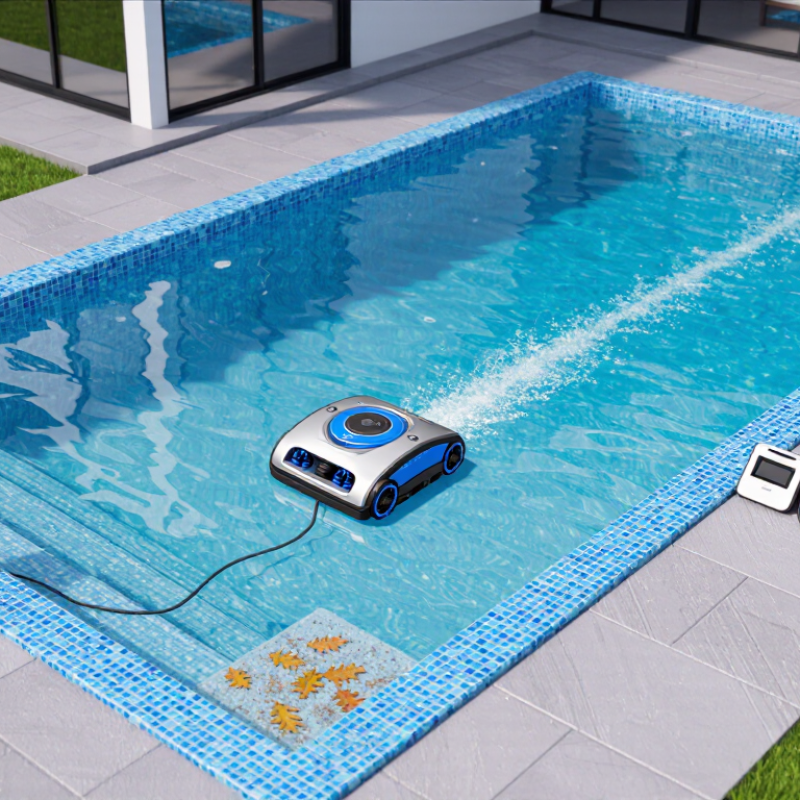
A robotic pool cleaner is a self-contained machine that travels through a pool to collect dirt and debris. It usually has an electric motor, rotating brushes, a pump, and a removable filter. The brushes loosen grit from the floor, while the pump draws water and particles through the filter. Cleaned water returns to the pool. Simple in principle.

Most models use tracks or wheels to move across the pool surface. Sensors and programmed movement help them cover the floor, and some can climb walls or scrub the waterline. Their route may vary with the pool’s shape, surface, and obstacles. A cleaner can still miss steps, tight corners, or areas blocked by toys. “Automatic” does not mean perfect.

Power comes through a cable connected to a control unit, or from a rechargeable battery. After a cycle, lift the cleaner out carefully, empty its filter, and rinse away trapped leaves or fine dust. A full filter can reduce cleaning performance. Check the manual before opening or servicing the unit, and keep the pool’s water chemistry balanced; the cleaner removes debris, not dissolved contaminants. One useful reality check: watch a cycle once before relying on its schedule. You may notice a blind spot.

How a Robotic Pool Cleaner Works

A simplified view of the main functions in a typical cleaning cycle

The bars show the functional sequence, not measured time or cleaning performance. A cleaner’s drive system moves it across pool surfaces while its pump draws in water and debris. A filter traps debris, filtered water returns to the pool, and control systems adjust movement; the exact sequence varies by model.

Which Features Matter Most in 2026

What Is the Best Robotic Pool Cleaner in 2026?

Which Features Matter Most in 2026

A cleaner’s route matters more than a flashy specification. Look for reliable coverage of the floor, walls, and waterline, with sensors that adapt when the pool shape changes. A shallow step, a curved corner, and a drifting leaf can expose weak navigation quickly. Check whether the filter traps fine dust as well as larger debris, and whether it lifts out without spilling grit back into the water. Small details count.

Power deserves careful comparison. ENERGY STAR guidance reports that certified pool pumps can use up to 65% less energy than standard pumps, but that figure applies to pumps, not robotic cleaners. Compare a cleaner’s own wattage or battery runtime, and ask how performance changes as its filter fills. A long runtime is not useful if suction fades halfway through.

Cable-free models avoid cord tangles, while corded units do not need recharging. Neither choice wins every pool. Check replacement-filter availability, warranty coverage, and whether parts can be serviced locally. An app may help schedule cleaning, but dependable pickup matters more than a polished screen. I’d also check the unit after a full cycle; marketing claims rarely show what happens in a dusty pool after a windy afternoon.

How Leading Cleaner Types Compare

What Is the Best Robotic Pool Cleaner in 2026?

How Leading Cleaner Types Compare

Suction-side cleaners connect to the pool’s skimmer or a dedicated suction line. They are often simple to maintain, but they draw debris into the pool’s filtration system. That means a full filter can slow cleaning. Pressure-side cleaners use water returning from the pump to move and collect debris. Many handle leaves well, though some setups need a booster pump and extra energy. Check your plumbing before choosing either type.

Robotic cleaners operate independently, using an onboard motor and filter basket. They can reduce reliance on the pool’s circulation system, but their cleaning paths and fine-particle pickup vary by model. You still need to empty the basket. The Pool & Hot Tub Alliance’s industry statistics estimate about 10.7 million residential pools in the United States; that variety of pool sizes and layouts makes a single “best” type unlikely. A small, screened pool may need different debris handling from a leafy pool with steps and tight corners. In practice, cord management and basket cleaning can be more annoying than expected. That matters, too. Compare filtration needs, pool shape, and the debris you actually see before prioritizing cleaning speed.

How to Choose a Cleaner for Your Pool

What Is the Best Robotic Pool Cleaner in 2026?

How to Choose a Cleaner for Your Pool

Choosing a pool cleaner starts with the pool, not a feature list. Measure its length and width, and note steps, ledges, and tight corners. A cleaner suited to a small, flat pool may struggle with a long pool or steep walls. Check the surface, too: tile, vinyl, and rough concrete can call for different brushes and traction. Look at what usually lands in the water. Fine dust needs effective filtration, while leaves and seed pods need a roomy debris basket. Check the manual for the cleaner’s recommended pool size and surfaces.

Think about how you will use and maintain it. A short cable can limit reach; a long one may tangle. Cordless models avoid that issue but need charging between cycles. Check whether the cleaner handles the floor, walls, and waterline, since not every model covers all three. Easy-to-remove filters matter. Emptying a clogged basket after a windy afternoon should not feel like a repair job. Test it. If possible, ask a local pool technician about your surface and common debris. I would not choose by cleaning speed alone; coverage and dependable parts matter more over time. And the advertised cycle time may not match a pool with heavy debris. That is easy to overlook.

What to Check Before Buying and Maintaining One

Choosing a robotic pool cleaner starts with the pool, not the feature list. Check whether it handles your surface, steps, walls, and waterline; some models clean floors well but struggle on steep slopes. Compare filter capacity and mesh size with the debris you actually see, from fine dust to maple seeds. A long cable can help in a wide pool, but it can also tangle. Check the manual for cable management, replacement parts, and service access before buying.

Cleaning is not sanitizing. A CDC analysis of 84,187 public-pool inspections found that about one in eight resulted in immediate closure; the report highlights why physical cleaning cannot replace water testing. Keep checking pH and sanitizer levels, even when the pool looks clear. After each cleaning cycle, empty and rinse the filter, remove hair from the tracks, and let the unit dry in shade. Small habits matter. One caveat: a cleaner that misses corners may still be useful, but expect to brush those spots by hand. Review the manufacturer’s maintenance schedule, and inspect seals and cables for wear before each season. Source: CDC, “Pool Inspection Data Show Need for Improved Pool Operation,” MMWR, 2016.

What Is the Best Robotic Pool Cleaner in 2026? — What to Check Before Buying and Maintaining One
Area to Check What to Verify Before Buying Practical Selection Guidance Maintenance Check
Pool size and shape Confirm the cleaner’s stated pool-size capacity and whether it is designed for your pool’s shape and layout. Measure the pool’s length and widest point. Choose a model whose stated capacity covers your pool, including any deeper or irregular sections. Remove the cleaner after its cycle and check for tangled debris or areas it repeatedly misses.
Surfaces and cleaning coverage Check which surfaces it can clean, such as the floor, walls, and waterline, and whether those surfaces match your pool finish. Confirm compatibility with your pool’s surface and whether wall or waterline cleaning is included rather than assumed. Inspect brushes and tracks or wheels for wear, and follow the manual’s cleaning and replacement instructions.
Debris and filtration Check the filter type, filter access, and the debris the cleaner is intended to collect. Choose filtration suited to the debris in your pool. Finer filtration can capture smaller particles, but may need more frequent cleaning. Empty and rinse the filter after use, or as directed by the manufacturer. Let it dry as instructed before storage.
Power and cable reach Verify the power arrangement, cable length, and any stated limits on extension cords or power connections. Check that the cable can reach the farthest part of the pool while allowing enough slack for movement. Follow electrical safety instructions. Rinse and untangle the cable as directed. Store it loosely rather than tightly coiled, and check for cuts or damage.
Cycle and controls Review available cycle options, scheduling features, and whether setup requires an app or network connection. Select controls that suit how often you clean and how much setup you want. Confirm which features work without an internet connection. Keep control units and connectors dry as instructed. Update or reset connected features only according to the manual.
Handling and storage Check the cleaner’s weight, carrying method, and any recommended lifting or removal procedure. Consider whether you can comfortably lift it from the pool and store it in a clean, dry place protected from harsh weather. Remove the cleaner from the pool when not in use if the manual recommends it. Drain and store it as directed.
Parts and support Review the warranty terms, service process, and availability of replacement filters, brushes, and other wear parts. Compare the written coverage and expected upkeep costs; warranty conditions and parts availability vary by model and seller. Keep purchase and service records, and replace worn parts with compatible parts specified for the cleaner.
Routine operating conditions Check the permitted water-temperature range and any restrictions related to pool chemicals or water conditions. Use the cleaner only within the operating limits stated in its manual and maintain pool water according to pool-care guidance. Rinse the cleaner after use when recommended, and do not leave it exposed to chemicals or conditions outside its stated limits.
Start typing to see products you are looking for.
Sign in

No account yet?

NewSale
SHARE YOUR CART