



10 Best Louvered Pergola Manufacturers for Global Buyers

Choosing a Louvered Pergola manufacturer involves more than comparing prices or attractive product photos. Global buyers also need clear specifications, dependable engineering, and responsive support. A motorized roof may look sleek in a showroom, yet everyday performance depends on practical details. Check blade movement, drainage paths, frame finishes, control options, and access to replacement parts. Small details matter. Especially outdoors.

This guide introduces ten manufacturers for buyers comparing options across markets and project types. It considers product range, customization, documented experience, warranty information, and the clarity of technical materials. These factors help narrow a shortlist, but they cannot replace project-specific checks. Ask for written performance data suited to your site, including relevant wind and snow-load guidance. Confirm who handles installation questions and what support remains available after delivery. Get answers in writing.

No single supplier will suit every climate, budget, or design brief. A coastal patio, a restaurant terrace, and a private garden can demand different finishes and service arrangements. Even polished brochures may leave useful questions unanswered. That is worth noticing, not overlooking. Buyers should compare quotations carefully and verify claims against product documents and references where available. Use this overview as a starting point, then assess each manufacturer against the conditions, expectations, and maintenance plans of your own project. A little skepticism helps. So does asking precise questions before committing.
10 Best Louvered Pergola Manufacturers for Global Buyers

What Defines a Louvered Pergola and How Its Parts Work

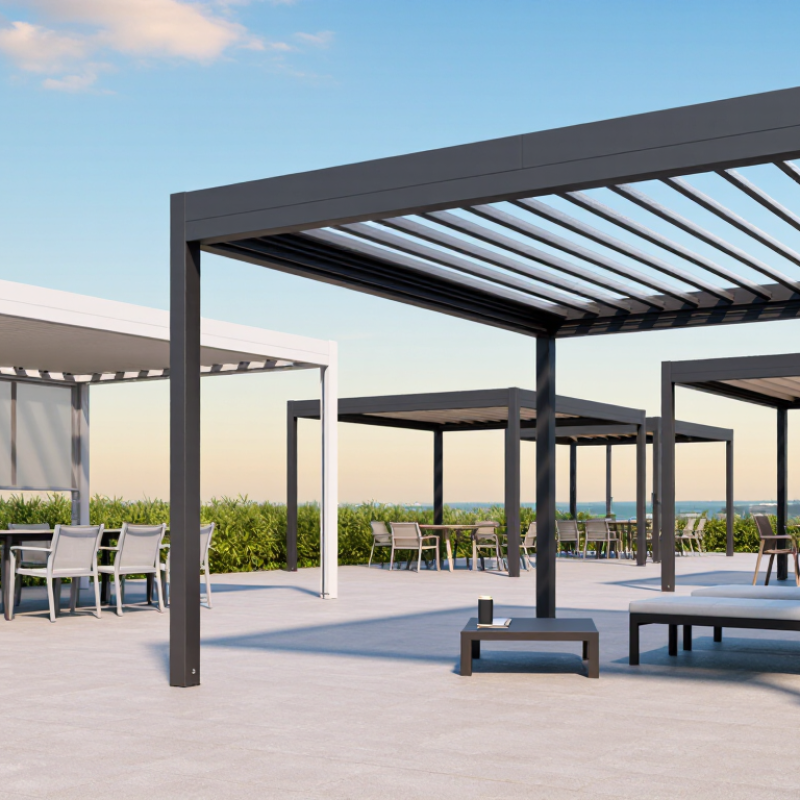
A louvered pergola is an outdoor structure with roof blades that rotate to adjust sunlight and airflow. Open the blades, and daylight reaches the patio. Tilt them, and they provide shade while directing light rain toward the edges. The central idea is adjustable cover, not a fully sealed roof. That distinction matters.

The main parts work together. Posts support the structure, while beams hold the roof frame. Louvers sit between the beams and pivot on pins or bearings. A connecting rod moves them in unison, using either a hand crank or a motor. When closed, the blades overlap to guide water into built-in channels or gutters. Those channels need a clear route to drain; otherwise, water can collect where it is least welcome.

Details affect everyday use. Check how smoothly the blades move, whether the frame feels rigid, and where runoff exits near doors or seating. A motorized system may offer convenient control, but it also adds wiring and components that require suitable installation and maintenance. No movable roof seals perfectly in every wind-driven shower. That is worth remembering. Local weather, installation quality, and careful upkeep all shape performance, so product specifications should be checked against the actual site.

Louvered Pergola Parts: How Blade Angle Changes Their Projection

Geometric projections of a louver blade at different tilt angles, measured as a percentage of its width.

The angle is measured from horizontal. As the louvers rotate, their horizontal projection decreases while their vertical projection increases. In a typical system, an actuator turns the blades at their pivot points within the supporting frame; the blade position helps regulate overhead sun and rain exposure. These values are geometric calculations, not product performance measurements.

How to Assess Manufacturers for Quality and Global Reach

When comparing louvered pergola manufacturers, look beyond attractive product photos. Request drawings that show blade dimensions, drainage paths, frame thickness, and motor placement. Ask how aluminum is treated and what coating tests are available. Useful evidence includes inspection records, written tolerances, and clear warranty terms. A smooth sample finish matters, but so does how joints feel when opened and closed. Small details count.

Tips: Request a physical corner sample and operate the louvers by hand. Ask for references from projects in a climate similar to yours. Confirm packaging dimensions, replacement-part availability, and who handles technical questions after shipment. Keep the answers in writing.

Global reach is more than shipping to many countries. Check whether the manufacturer can provide export documents, installation guidance, and drawings in usable units. Ask how they protect long frames from bending during transit, and whether parts can be identified from a service diagram. Video calls can help, but they cannot replace a documented inspection. A capable supplier should explain limits plainly, including lead-time risks and options for unusual site conditions. One uncomfortable truth: even a strong factory may communicate poorly across time zones. Test that process before placing a large order.

10 Best Louvered Pergola Manufacturers for Global Buyers — How to Assess Manufacturers for Quality and Global Reach
Assessment Area What to Look For Evidence to Request Why It Matters to Global Buyers Priority
Structural engineering Clear design limits for wind, snow, and other project-specific loads; documented connection and anchoring details. Project-specific drawings, load calculations, and test or engineering reports applicable to the proposed configuration. Required loads and building rules vary by site, so a product should be checked against the installation location rather than assumed suitable everywhere. Critical
Materials and corrosion protection Identified alloy and component materials, suitable surface preparation, and a coating system appropriate to the intended environment. Material specifications, coating documentation, and written guidance for coastal or otherwise corrosive conditions. Material selection and maintenance needs can affect durability, especially in humid, coastal, or high-pollution locations. Critical
Louver operation and water management Consistent louver movement, secure connections, and a defined route for rainwater through gutters and downpipes. Operating instructions, drainage details, and a demonstration or inspection of the proposed system. Drainage performance depends on installation, roof configuration, and rainfall conditions; buyers should confirm how water is managed at the site. Critical
Manufacturing quality control Documented inspection steps for dimensions, finish, moving parts, electrical components, and final assembly. Quality-control procedures, inspection records, and an agreed pre-shipment inspection plan. Consistent checks reduce the risk of fit, finish, or operation issues when products are shipped and assembled far from the factory. High
Motor and electrical components Clearly specified motors, controls, wiring requirements, and compatible power options for the destination market. Component data sheets, wiring diagrams, control instructions, and applicable conformity documents for the destination. Electrical requirements and product compliance rules differ by market; compatibility should be confirmed before ordering. High
Testing and product documentation Test results and technical documents that correspond to the actual model, options, and configuration being quoted. Reports with identifiable product scope, installation guidance, care instructions, and current product specifications. Documents are useful only when they apply to the product being purchased and meet the buyer’s local project requirements. High
Customization and project coordination Capacity to confirm dimensions, site interfaces, finish choices, accessories, and design revisions before production. Approved shop drawings, a written specification, and a documented process for handling changes. Accurate coordination helps prevent mismatches between the pergola, building structure, drainage, and other site elements. High
Export packaging and shipping Packaging designed to protect long, finished components and clearly identified parts during handling and transport. Packing list, packaging photographs or specifications, shipping terms, and a process for reporting transit damage. International shipments involve multiple handling stages; packaging and clear shipping responsibilities help manage delivery risks. High
Installation and after-sales support Accessible installation instructions, replacement-part identification, troubleshooting guidance, and a defined support contact. Installation manuals, spare-parts information, response process, and written warranty terms. Local installers may need remote technical help, and replacement parts can be harder to source across borders. High
Delivery capability and commercial reliability Transparent production stages, realistic lead-time estimates, clear payment terms, and communication across time zones. Written order schedule, milestone updates, export references where available, and clearly stated commercial terms. Reliable planning helps buyers coordinate site preparation, installation crews, customs processes, and final delivery. High

Ten Louvered Pergola Manufacturers Serving International Buyers

Choosing a louvered pergola manufacturer for an international project involves more than comparing catalogue photos. Buyers should check frame dimensions, blade movement, drainage design, and the stated wind-load limits. Ask for installation drawings and material specifications before approving production.

Details matter.

Manufacturers serving overseas buyers should also explain packing methods, lead times, shipping terms, and what arrives in each crate. Request photos of finished units and references from projects in similar climates, while remembering that one installation cannot predict every site condition. Electrical controls and sensors may need local technical review.

That step is easy to overlook. Compare warranty coverage in writing, including exclusions for surface wear, motors, and weather damage. A polished sample is useful, but it cannot show how every joint will perform after years of exposure.

No supplier can remove all uncertainty; even careful specifications leave room for installation mistakes and changing site conditions. Buyers can reduce risk by confirming responsibilities, inspection points, and service access before placing an order.

How Leading Brands Compare in Design, Customization, and Support

Louvered pergola manufacturers differ in more than frame shape. Compare blade angles, post dimensions, drainage channels, and finish options. These details affect shade, rain handling, and how the structure looks beside a home. Ask for technical drawings and written specifications, not only polished product photos. A clear drawing should show where water exits and how the louvers move. Check whether wind-load information applies to your selected size and installation conditions. Looks matter, but the practical details matter more.

Customization can range from color choices to adjusted spans, integrated lighting, and screens. Reliable suppliers explain which changes affect cost, production time, or structural requirements. Support matters after the order, too. Ask about installation guidance, replacement parts, and response times across time zones. A helpful sales conversation is encouraging, but it does not prove service will stay consistent. That gap is worth checking. Request a sample finish or a reference project with similar dimensions; comparisons become clearer when the details match.

Tips: Compare two or three written quotes using the same dimensions and options. Confirm packaging, delivery terms, warranty coverage, and who answers technical questions. Keep the answers in writing. Small omissions can become expensive surprises. No supplier makes every detail effortless, and a perfect-looking brochure can still leave practical questions unanswered.

What to Verify Before Ordering a Pergola Across Borders

Before ordering a louvered pergola overseas, check more than the quoted dimensions. Request drawings showing post spacing, blade range, drainage paths, and mounting plates. Confirm the stated wind and snow loads match your site, and ask which test method supports those figures. A product sheet is not proof of a tested assembly. Verify alloy grade, coating thickness, fastener material, and replacement-part availability in writing. Small omissions matter. A missing anchor specification can delay installation or require costly redesign.

Tips: Ask for a packed-crate list, gross weight, and delivery term. Photograph the crate at arrival and record any damage before signing.

Shipping dates can shift. UNCTAD’s Review of Maritime Transport 2024 reported that container-ship transits through the Suez Canal fell about 67% year-on-year in early 2024 amid route disruptions. Ask suppliers for a realistic production window, the named port, and a plan for rerouting or storage. Then check whether the quote covers export packing, customs paperwork, inland delivery, and unloading; these costs may sit outside the product price. Have a local engineer or installer review the foundation details before payment. I’ve seen attractive proposals leave this step vague, and that is an uncomfortable gap. Compare warranty terms across borders, too: clarify who pays freight for replacement parts and whether the finish warranty excludes coastal exposure.

Start typing to see products you are looking for.
Sign in

No account yet?

NewSale
SHARE YOUR CART