








ROPES look simple on a shelf. In use, their construction can decide whether a line handles abrasion, repeated loading, moisture, or a heavy working load. For global buyers, the right choice depends on the job—not just the material or price. This guide compares natural-fiber, synthetic-fiber, and wire ropes, with practical attention to strength, handling, durability, and maintenance.
The market is changing, too. Grand View Research estimated the global ropes market at USD 12.64 billion in 2023 and forecast a 5.4% compound annual growth rate from 2024 to 2030. That estimate signals expanding demand, but market growth does not tell a buyer which rope is suitable. Product specifications and documented test results matter more. A rope that feels thick and reassuring may still be wrong for a particular load path.
A useful selection rule is simple: match construction to conditions, then verify the manufacturer’s stated limits. No rope is universally best. Because no source material or verifiable named rope-industry expert quotation was provided, I have not invented one; an attributable expert comment should be checked before publication. That restraint matters. In ROPES, confident claims are easy to make, while real-world performance depends on details such as splices, fittings, wear, and inspection. Begin with those details.
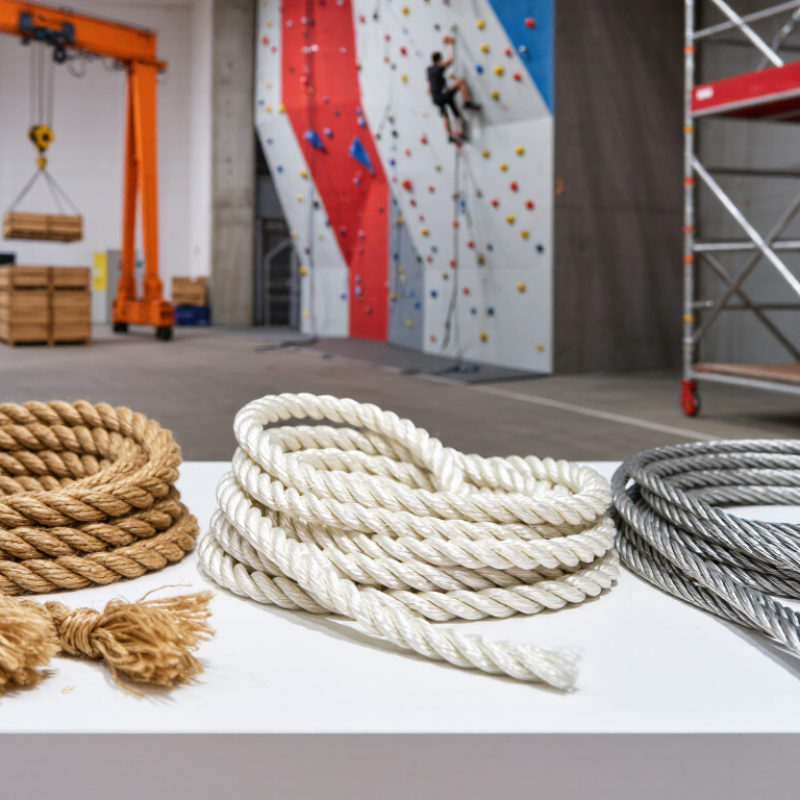
Rope is a flexible line made from fibers or filaments arranged into strands, then twisted, braided, or laid together. Its construction affects handling, flexibility, and resistance to wear. A braided rope may feel smooth in the hand, while a laid rope often shows a visible spiral. Small details matter.
Core properties need consistent measurement. Diameter is checked across several points, since a rope can flatten under a caliper. Linear density records mass per unit length and helps buyers compare similar constructions. Breaking strength is measured by pulling a sample until it fails, usually under a controlled test method. The result is not a recommended working load; knots, wear, and shock loading can reduce usable strength.
Elongation describes how much a rope stretches under a stated load. This matters when a taut line must limit movement, or when some give is useful. Test conditions should be recorded, including sample length, conditioning, and loading rate. Otherwise, numbers may not compare fairly. I have seen tidy specification sheets leave these details unclear. That is easy to overlook. Buyers should also consider abrasion, moisture, and sunlight exposure for the intended setting. No single test captures every service condition, and a lab result cannot fully predict years of handling.
Modern rope manufacturing uses synthetic and natural fibers, each with distinct strengths. Polyester resists sunlight and stretches less than nylon, making it useful for mooring and outdoor lines. Polypropylene is lightweight and floats, but prolonged sunlight can weaken it. Fiber choice affects handling, durability, and safety. Trade-offs matter.
Nylon stretches under load and can absorb shock, which suits dynamic applications. It may absorb water, however, changing its weight and behavior. High-modulus polyethylene offers exceptional strength for its weight and low stretch, but heat and abrasion need careful consideration. Hemp and cotton provide a natural feel and easy handling, though moisture can encourage deterioration. A rope’s construction also matters: braided and twisted designs can behave differently, even when made from the same fiber. I would not judge a rope by fiber name alone.
Tips: Match fiber to the load, environment, and inspection routine. Check product specifications for working-load guidance, not just breaking strength. Ask how the rope performs when wet, exposed to sunlight, or repeatedly bent. A small detail can change the choice.
A rope’s construction shapes how it stretches, grips, and handles repeated loading. Three-strand twisted rope is easy to splice and inspect, but it can kink under rotation. Braided rope bends smoothly and suits winches or lifting systems where steady handling matters. Kernmantle rope places a load-bearing core inside a protective sheath, helping shield fibers from abrasion. The outer layer is not the whole story.
For buyers comparing low-stretch kernmantle ropes, EN 1891:1998 sets a maximum elongation of 5% under its specified test conditions. That figure applies to ropes within the standard’s scope, not every rope sold as “static.” ISO 2307:2019 outlines tests for tensile force, elongation, and linear density in fiber ropes. These measurements help compare samples, but they do not replace checking the rope’s intended use, fiber, diameter, and operating environment. A small mismatch can matter.
Tips: Ask for construction details and test results for the exact rope diameter. Check how knots, moisture, and abrasion may affect performance. Test a sample in your setup; catalog figures can miss real handling differences.
Rope choice often follows the working environment, not just the load rating. On fishing vessels and docks, nylon lines are used for mooring because they stretch under sudden tension. That stretch can soften shock loads, but it also means a line may move more than expected. Polyester has lower stretch and good resistance to sunlight, so it is common in sailing rigging and outdoor lifting systems. For overhead lifting, rope construction, rated capacity, and inspection requirements must match the equipment and task.
Steel wire rope is widely used on cranes, elevators, and construction sites, where strength and resistance to abrasion matter. It is heavy, though, and damaged wires can be hard to spot without close inspection. Polypropylene floats, making it practical for fishing nets, floating lines, and some marine work. Heat and abrasion can shorten its service life. High-modulus synthetic ropes offer high strength at low weight, useful on some vessels and in specialized hauling systems. They need compatible fittings and careful handling. Details matter. A rope that performs well on a dry warehouse floor may behave differently when wet, exposed to salt, or repeatedly bent around a small pulley. Specifications help, but real operating conditions deserve a second look.
Global buyers should compare ropes by working conditions, not headline strength alone. Polyester often suits wet, UV-exposed tasks because it absorbs little moisture and stretches less than nylon. Nylon’s shock absorption can help with dynamic loads, but its stretch may complicate precise positioning. Polypropylene is light and floats, yet heat and abrasion can shorten its service life. Natural-fiber ropes may suit lower-demand uses, though moisture can change their handling. Small details matter.
Tips: Ask for rope construction, diameter tolerance, splice details, and a production sample. Compare like with like. Check test reports and labels against the intended application, rather than relying on one strength figure.
Before ordering, specify material, lay or braid, color, packaging, and delivery point. Request batch identification and confirm whether stated figures refer to minimum breaking force or working load; these terms are not interchangeable. Ask how the supplier controls diameter and batch variation, then inspect a sample for uneven strands, stiff spots, or loose ends. Lead times and freight costs can shift, while a low quote may omit useful inspection evidence. Even careful teams miss storage conditions, so state how and where the rope will be kept. Recheck the specification before production.
| Rope Type | Typical Construction and Materials | Key Characteristics | Common Applications | What Buyers Should Compare | Sourcing and Specification Checks |
|---|---|---|---|---|---|
| Three-Strand Laid Rope | Three strands twisted together; commonly made from polypropylene, polyester, nylon, or natural fibers. | Simple construction that is easy to splice. It can rotate or kink under load, so handling and installation matter. Properties vary substantially by fiber. | General-purpose tying, mooring, utility work, and traditional marine applications, depending on material and specification. | Fiber type, diameter, construction consistency, elongation, abrasion resistance, and whether the application can accommodate rope rotation. | Request the stated material, nominal diameter, mass per length, splice guidance, and a test report tied to the product specification. Confirm any UV or marine-use claims. |
| Eight-Strand Plaited Rope | Eight strands arranged in a plaited construction; often produced from polyester, polypropylene, or combinations of fibers. | Typically non-rotating or low-rotating compared with conventional three-strand laid rope. Flexibility and handling depend on the fiber and construction. | Mooring, anchor lines, towing, and other marine duties where a plaited construction is suitable. | Rope diameter, fiber blend, elongation, abrasion performance, splice method, and compatibility with winches, fairleads, or fittings. | Specify the required construction and material rather than relying on a generic “marine rope” description. Check finished-rope test data and recommended inspection practices. |
| Single-Braid Rope | A braided sheath forms the rope structure, commonly using synthetic fibers such as polyester, nylon, or high-modulus fibers. | Often flexible and spliceable; performance varies widely with fiber choice, braid design, and finishing. Some single braids can flatten or change shape under compression. | Sailing, general rigging, utility lines, and selected lifting or industrial uses when the rope is specifically rated for the task. | Fiber, braid pattern, diameter tolerance, handling, elongation, splice efficiency, and whether a core is present in the specified design. | Confirm the exact construction, rated use, termination instructions, and working-load guidance. Do not infer lifting suitability from appearance or fiber name alone. |
| Double-Braid Rope | A braided core covered by a braided sheath; commonly made from polyester or nylon, with other fiber combinations available. | Balanced core-and-sheath construction can provide good handling and abrasion protection. The sheath and core share the load according to the design. | Sailing lines, marine mooring, and industrial applications where a flexible braided rope is specified. | Core and cover materials, cover construction, elongation, abrasion resistance, splice design, and compatibility with the application’s hardware. | Ask for construction details and manufacturer-approved splicing instructions. Verify whether published strength applies to the rope alone or to a specified termination. |
| Kernmantle Rope | A load-bearing core (kern) protected by an outer sheath (mantle); commonly produced from nylon or polyester. | The sheath protects the core and helps with handling. Dynamic and low-stretch versions are designed for different purposes and are not interchangeable. | Rope access, rescue, and climbing-related applications when the rope meets the relevant application and safety requirements. | Dynamic or low-stretch classification, diameter, elongation, sheath construction, compatibility with devices, and applicable safety standards. | Require documentation for the intended use and applicable standard or certification. Check inspection, retirement, storage, and device-compatibility requirements. |
| Wire Rope | Steel wires are twisted into strands, which are then laid around a core; constructions and steel grades vary by design. | High strength and resistance to heat compared with many fiber ropes, but heavier and less flexible. Corrosion resistance depends on material and protective finish. | Cranes, hoists, elevators, winches, and other engineered lifting or mechanical systems. | Construction, core type, nominal diameter, grade, lay, minimum breaking force, flexibility, corrosion protection, and bending requirements. | Specify the applicable standard, inspection criteria, end termination, and system design requirements. Verify certificates and ensure the rope is matched to the equipment and duty. |
Buyer note: Rope performance depends on construction, material, diameter, termination, environment, and application. Breaking strength is not the same as a safe working load; use the limits and safety factors specified by the applicable standard, equipment, and qualified designer.
No account yet?
Create an Account